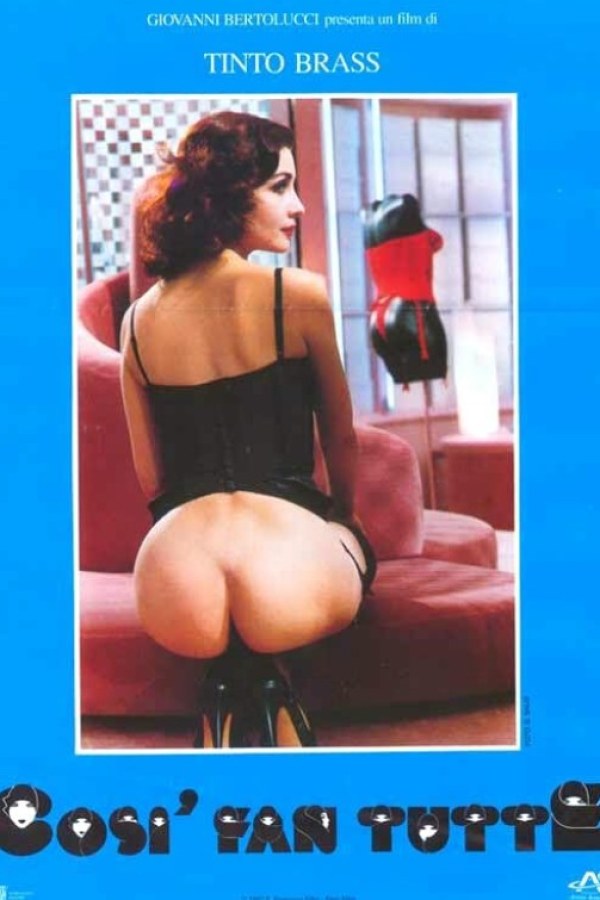
🎬 All Ladies Do It
All Ladies Do It (1992) is a lavishly shot, high-energy, and completely uninhibited erotic romp that holds a specialized, historically significant archival slot within the genre-history index of QueerFilmHub.com. Directed by the undisputed king of Italian provocative cinema, Tinto Brass, the film masquerades as a hyper-stylized comedy while acting as a deeper exploration of sexual fantasy, fidelity, and female agency. Set against the sun-soaked, picturesque backdrop of Venice, the story follows Diana (Claudia Koll), a beautiful, vibrant, and fiercely passionate young woman who is happily married to her straight-laced, deeply insecure husband, Paolo (Paolo Lanza).
While Diana loves Paolo deeply, she refuses to let her sexual imagination be policed by marital boundaries. She actively seeks out a kaleidoscope of extramarital encounters, ranging from wild public flirtations to intense, highly experimental encounters with both men and women.
Paolo acts as the traditional, anxious counterweight—initially driven to absolute madness by jealousy, he finds himself trapped in a loop of voyeuristic obsession, forcing Diana to recount every single detail of her escapades. The film’s queer relevance is anchored heavily in Diana’s casual, completely unashamed bisexuality. Her passionate, beautifully choreographed sapphic encounters are treated by Brass not as a source of tragic angst or moral ruin, but as a celebratory, joyful extension of her untamable appetite for life. By the time the theatrical narrative reaches its carnivalesque conclusion, the film effectively upends traditional heteronormative possessiveness, arguing that true liberation lies in shedding the constraints of sexual shame.
💡 Did You Know? (Czy wiesz, że?) 🧠
A Classical Foundation: The original Italian title, Così fan tutte, is a direct nod to Wolfgang Amadeus Mozart's iconic 1790 opera of the same name. Translated literally to "Thus do all [women]," Brass hijacked the classical theme of testing lovers' fidelity and transformed it into a modern, sex-positive manifesto.
The Claudia Koll Phenomenon: The film was a massive box-office sensation in Italy and launched lead actress Claudia Koll into instant, nationwide superstardom. Ironically, after cementing her status as a 90s secular erotic icon, Koll underwent a profound spiritual conversion in the 2000s, completely walking away from adult cinema to become a dedicated Catholic missionary.
Master of the Visual Gaze: Tinto Brass’s signature style is on full display here, heavily relying on wide-angle lenses, mirrors, and deep saturated primary colors. Cinematographers Silvano Ippoliti and Massimo Minto shot Venice with a glistening, postcard-like surrealism that makes the entire movie feel like an extended, cartoonish fantasy.
A Cinephile’s Technical Crew: Co-screenwriter Bernardino Zapponi was no stranger to elite Italian filmmaking. Before collaborating with Brass on his erotic catalogs, Zapponi was a frequent, long-time co-writer for the legendary auteur Federico Fellini, penning cinematic masterpieces like Fellini's Roma (1972) and Fellini's Casanova (1976).

Comments
No comments yet. Be the first!
Leave a comment