Somatic Anarchism, The Carnal Baroque, and the Liberation of the Voyeuristic Gaze
1. Introduction: The Libertine Intellectual
Tinto Brass stands as an undefeated, fiercely autonomous titan of transgressive European cinema. Historically misunderstood and systematically marginalized by mainstream, puritanical criticism, Brass has built a body of work that is deeply intellectual, political, and uncompromised. Emerging from the radical avant-garde movements of the 1960s and trained in the elite archives of the Cinémathèque Française, Brass rejected the sterile, intellectual coldness of high-art cinema. Instead, he chose to weaponize the human body. His filmography positions pure, unadulterated eroticism not as commercial exploitation, but as a form of somatic anarchism—a vital, joyous counter-strike against state censorship, ecclesiastical policing, and the suffocating morality of the bourgeoisie.
2. Formal Signature: The Carnal Baroque and Spatial Intimacy
The directorial signature of Tinto Brass is instantly recognizable through its lush, painterly framing and a revolutionary approach to spatial geometry. Brass treats the camera as an active, breathing voyeur that celebrates, rather than exploits, the physical presence of his actors.
The Avant-Garde Beginnings & Political Satire: Before his total immersion into high-concept erotica, Brass captured political fractures in films like Il disco volante (1964) and Salon Kitty (1976), using absurdism and sexual transgression to expose the rotten core of fascism and institutional surveillance.
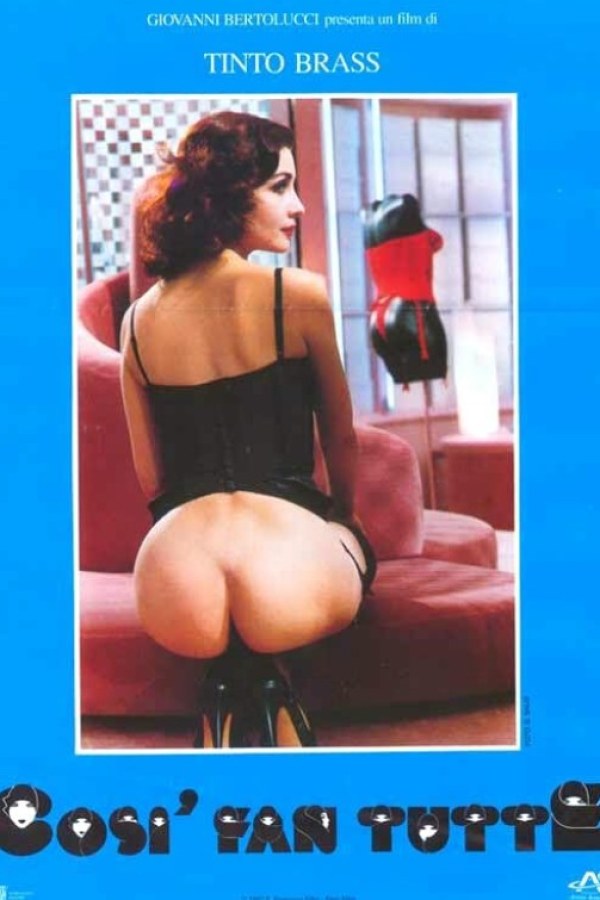
The Erotic Zenith: In masterworks like The Key (La chiave, 1983) and All Ladies Do It (Così fan tutte, 1992), Brass perfected what can be called the "Carnal Baroque." His visual system utilizes warm, saturated Mediterranean textures, dynamic mirrors, wide-angle lenses that emphasize physical contours, and a constant, tactile interaction between skin and the surrounding architecture.
3. Deconstructing the Gaze: Reclaiming the Joy of Looking
What secures Tinto Brass his permanent, elite archive status within the QueerFilmHub matrix is his radical subversion of the cinematic gaze. While mainstream Hollywood cinema relies on a passive, hidden, and often predatory "male gaze," Brass makes the act of looking entirely transparent and celebratory. His protagonists—predominantly fierce, fiercely autonomous women—are never passive victims of the lens. They actively curate their own sexual scenarios, weaponizing their desires to claim absolute sovereignty over their lives. Brass documents a world where the body is a temple of uncompressed joy, and where the ultimate political act is to refuse to hide one's pleasure from the world.
4. Conclusion: The Eternal Archive of Liberation
Tinto Brass remains a vital, irreplaceable monument to cinematic bravery and high-concept independent storytelling. By refusing to compromise with industry sensors or moral panics, his extensive filmography stands as an invaluable historical archive of physical and creative liberation. He continues to remind contemporary filmmakers that cinema must remain a sensory experience, proving that true subversion begins when we have the courage to strip away societal conditioning and capture the raw, unfiltered truth of human desire.