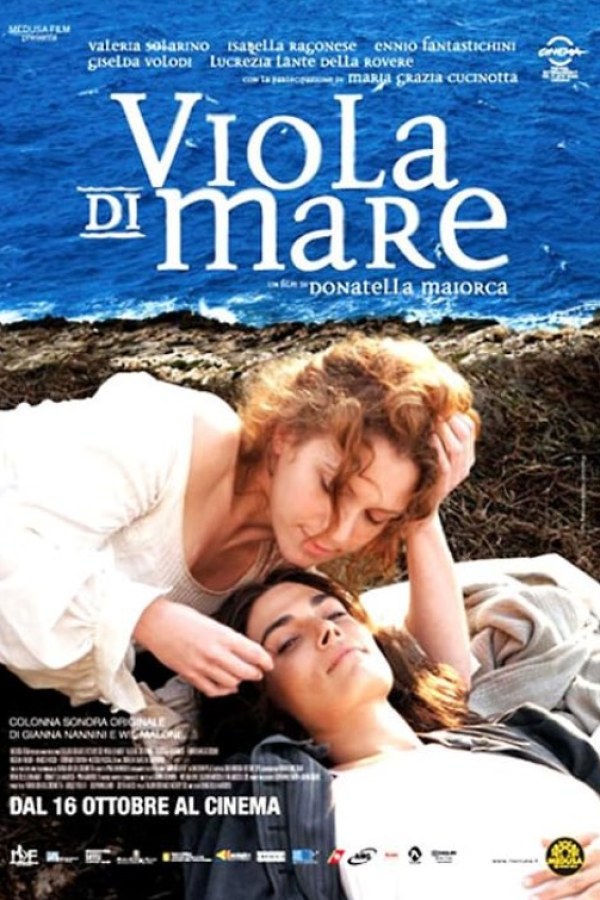
🎬Viola di mare
Viola di mare (2009) is a sweeping, beautifully raw, and sumptuously lensed historical melodrama that stands as a vital cornerstone of Italian queer cinema. Set against the sun-baked, windswept backdrop of a small Sicilian island during the turbulent 1860s (the backdrop of the Expedition of the Thousand), the story captures the defiant, untamed love between two women clashing against a brutally rigid patriarchal society. Angela (Valeria Solarino), the rebellious, strong-willed daughter of a tyrannical local quarry boss, has been hopelessly infatuated with her childhood friend Sara (Isabella Ragonese) since youth. When Sara returns to the island as a young adult, the dormant sparks between them instantly ignite into a fierce, all-consuming sapphic romance. For the QueerFilmHub.com audience, this film takes the conventional "forbidden historical romance" trope and spins it on an extraordinary, reality-based axis. When Angela refuses a marriage arranged by her abusive father and proudly confesses her love for Sara, she is brutally locked away. Desperate to save her daughter from a lifetime of torment, Angela’s long-suffering mother (Giselda Volodi) orchestrates a mind-bending compromise: she forces the local priest to declare that a mistake was made at birth, legally altering Angela's birth certificate to transform her into a man named "Angelo". Cutting her hair and adopting male attire, Angela steps into the role of her father's heir so she can publicly and legitimately marry Sara. Director Donatella Maiorca delivers a striking, emotionally breathless exploration of gender expression and identity. By forcing a woman to shed her visible femininity in order to claim the freedom of her desires, Viola di mare highlights the staggering lengths queer people have historically gone to just to preserve their love. ✨
💡 Did You Know? (Czy wiesz, że?)
🧠The Literal Title Metaphor: The film's title (Viola di mare) is the Sicilian name for the Mediterranean rainbow wrasse (Coris julis). This highly symbolic fish is protogynous, meaning it is born female and can organically transform into a male as it matures—a perfect biological mirror to Angela's societal transformation. Based on a Shocking True Story: The screenplay was adapted from the historical non-fiction novel Minchia di re by Giacomo Pilati, which documented real-life archives of gender-bending and queer survival in 19th-century Sicily. A Sensational Soundtrack: The film's lush, urgent, and highly melancholic musical score was composed by legendary Italian rock singer-songwriter and queer icon Gianna Nannini, earning a nomination for Best Original Song at Italy's prestigious Nastro d'Argento Awards. Award Circuit Darling: Valeria Solarino’s tour-de-force dual performance as Angela/Angelo garnered widespread international critical acclaim, winning her the Best Actress award at both the N.I.C.E. Festival in America and the Bilbao International LGBT Film Festival. 🌟 Why it fits your site ✨🧩 Fascinating Gender Discourse: The transition from Angela to Angelo offers your writers an incredible framework for essays on gender performance, historical passing, and the construct of patriarchal privilege.🎨 Arthouse Aesthetic Appeal: Between the ruggedly stunning Sicilian coastline and the deeply textured, authentic 19th-century period costuming, this film is highly scannable and visually dazzling for readers. 🌈 Essential Italian Representation: Spotlighting Mediterranean queer history provides highly unique, refreshing geographic diversity that sets QueerFilmHub.com apart from Western-centric mainstream databases.

Comments
No comments yet. Be the first!
Leave a comment