Italian cinema has a long, rich history of sweeping landscapes and intense melodrama, but for decades, these stories were told almost exclusively through a patriarchal lens. Enter Donatella Maiorca—a fierce, visionary Sicilian director who has dedicated her career to hijacking the grand, operatic language of Italian drama and refocusing it entirely on the inner lives, struggles, and forbidden passions of women.
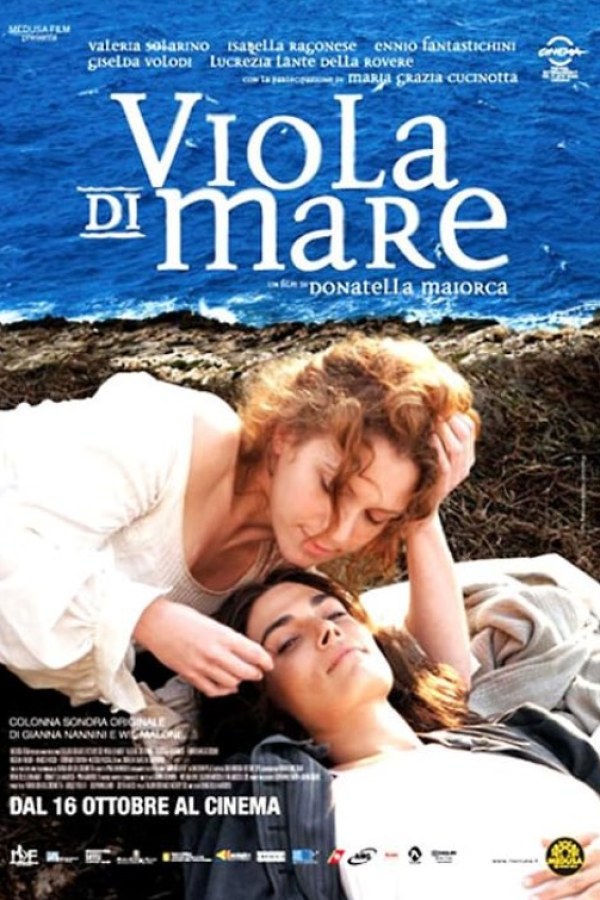
For the QueerFilmHub community, Maiorca is a foundational filmmaker. Her masterwork Viola di mare (2009) proved that historical queer stories from the Mediterranean don't have to be small, quiet indie projects—they can be epic, visually spectacular, and politically shattering. Here are the lesser-known creative philosophies and directorial signatures that define her brilliant work.
1. The Sicilian Roots: Transforming Topography into Psychology
One of the most defining and authentic aspects of Maiorca’s filmography is her deep, complex relationship with her birthplace, Sicily. Rather than shooting the island as a picturesque, postcard-perfect vacation spot for tourists, Maiorca uses the Sicilian landscape as a psychological battlefield.
In her direction, the physical environment mirrors the emotional states of her characters. The jagged, blindingly white stone quarries, the volcanic rock, and the isolating Mediterranean sea in her films are not just backdrops—they are physical manifestations of the rigid, unyielding societal and religious structures that her queer and female protagonists must fight against. Maiorca directs space just as meticulously as she directs actors, making the setting feel like an active antagonist.
2. Radical Empathy and the Subversion of "Italian Melodrama"
Italian cinema loves melodrama, but historically, when women crossed societal boundaries in these stories, they were punished by the narrative to satisfy conservative audiences. Maiorca completely flips this dynamic on its head.
Whether directing contemporary dramas like her debut feature Viol@ (1998)—which explored the taboo complexities of cyber-eroticism and female fantasy long before the internet became mainstream—or historical epics like Viola di mare, Maiorca practices what critics call radical empathy. She refuses to judge or moralize her characters' choices. Even when her protagonists make reckless, dangerous, or desperate decisions to survive, Maiorca’s camera stays intensely loyal to them, framing their rebellion as an act of profound courage rather than a moral failing.
3. The Intimacy of Gender Performance
Maiorca possesses a rare, highly sophisticated understanding of how gender is performed in society. In Viola di mare, when she guides Valeria Solarino through the transition from Angela to "Angelo," Maiorca’s direction avoids the cheap, comedic tropes often found in traditional cross-dressing cinema.
Instead, Maiorca approaches the transition with a deeply serious, psychological focus. She directs the lens to capture the physical weight of masculinity—how a woman must alter her posture, her voice, and her stride to occupy a space of male privilege. By showing how seamlessly the town accepts this deception, Maiorca uses her directorial voice to make a brilliant, sharp statement: that gender roles are often just theatrical constructs, and society is more willing to accept a performed lie than an uncompromised, independent woman.
4. Directing the Invisible: Subtext and Sensory Intimacy
A major signature of Maiorca’s visual style is her ability to film things that are felt rather than spoken. Because her characters often live in heavily policed, conservative environments where speaking about queer desire could result in violence or death, she relies heavily on sensory cinema.
Maiorca’s sets are built around the power of the gaze, the sound of heavy breathing, the texture of skin against stone, and the sudden, electric tension of a shared secret in a crowded room. This meticulous focus on sensory details ensures that when her characters finally share a private moment of physical intimacy, the scene feels incredibly urgent, cathartic, and holy—a safe haven carved out of a hostile world.
5. A Powerful Advocate for Female Leadership in European Cinema
Beyond her artistic achievements on set, Maiorca is a highly respected, articulate voice fighting for structural change within the European film industry. Operating in Italy—a film landscape that has historically been heavily dominated by male directors and producers—Maiorca has spent decades pushing for greater institutional support, funding, and distribution for female and queer storytellers.
She approaches filmmaking as a collective, political act. By continuously bringing together talented female screenwriters, cinematographers, and actors, Maiorca creates a creative lineage, proving that when women are handed the keys to big-budget historical and psychological cinema, they can create masterpieces that are universally resonant and structurally unforgettable.
The Verdict
👑 Donatella Maiorca 👑 is a cinematic treasure who successfully infused the grand, passionate traditions of Italian filmmaking with a radical, uncompromising queer dignity. By refusal to sanitize her characters' desires or bow to conservative storytelling tropes, she remains an essential auteur for the QueerFilmHub community. Her lens reminds us that even in the darkest, most oppressive corners of history, love and identity will always find a way to rewrite the rules. 🚀🌈👑