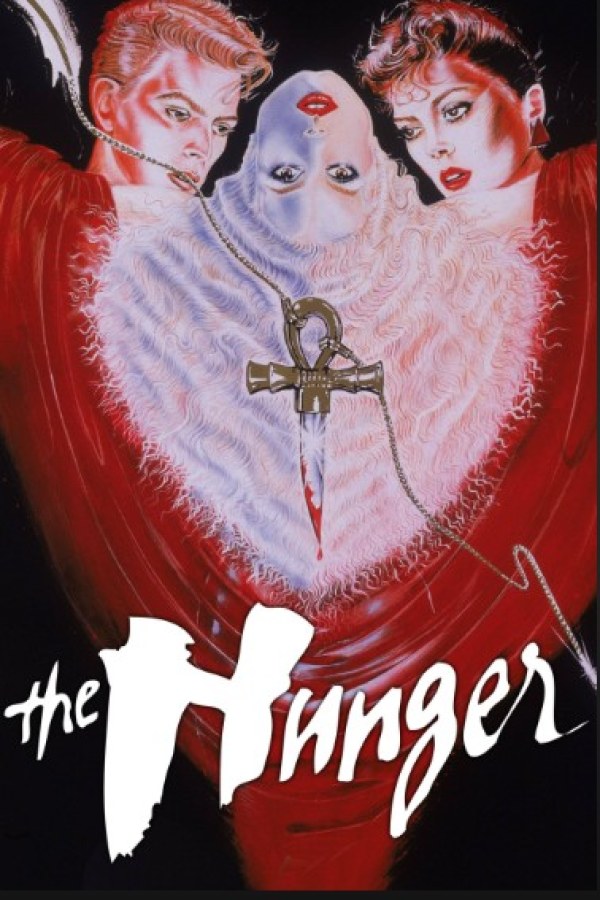
🎬 The Hunger
Set in sleek, shadowy 1980s Manhattan, The Hunger follows Miriam Blaylock (Catherine Deneuve), an ageless, aristocratic vampire who feeds on human blood and passes immortality onto her chosen lovers. For centuries, her companion has been John (David Bowie), a refined cellist. However, John suddenly begins to age rapidly, his body deteriorating within days—revealing the dark catch to Miriam's promise of eternal life: while she remains immortal, her partners eventually wither into a state of living decay. Desperate for medical help, John visits Dr. Sarah Roberts (Susan Sarandon), a brilliant physician researching cellular aging and sleep disorders. Though too late to save John, Sarah catches Miriam's eye. Miriam seduces Sarah into a hypnotic, intensely erotic sapphic affair, infecting her with vampirism as she attempts to groom Sarah to become her new eternal companion.
⭐ Film Evaluation & Ratings 📈
🟡 IMDb Rating: 6.6 / 10
🍅 Rotten Tomatoes: 54% (Critics) / 70% (Audience)
🗣️ Critical Consensus: The feature directorial debut of Tony Scott, The Hunger initially polarized critics with its hyper-stylized MTV aesthetics, billowing curtains, and glacial pacing, yet it has ascended to legendary status as a cornerstone of queer gothic cinema. Audiences and modern critics revere its intoxicating atmosphere, iconic Bauhaus opening sequence, and the unforgettable erotic chemistry between Catherine Deneuve and Susan Sarandon.
💡 Did You Know?
Iconic Sapphic Love Scene: The extended, shadowy bedroom sequence between Catherine Deneuve and Susan Sarandon—set to Léo Delibes' "Flower Duet" from Lakmé—is widely cited by queer film historians as one of the most famous and influential lesbian love scenes in mainstream 1980s cinema.
Goth Subculture Landmark: The film opens in a London nightclub with goth-rock pioneers Bauhaus performing their signature track "Bela Lugosi's Dead," cementing The Hunger as a foundational visual text for 1980s goth and queer underground culture.
Based on Whitley Strieber's Novel: The screenplay is adapted from the 1981 horror novel of the same name by Whitley Strieber, which explicitly leaned into bisexual and sapphic vampire tropes.
Recommendations
Similar Titles: Bound (1996), Daughters of Darkness (Les Lèvres rouges, 1971), The Carmilla Movie (2017), Byzantium (2012), Titane (2021).


Comments
No comments yet. Be the first!
Leave a comment