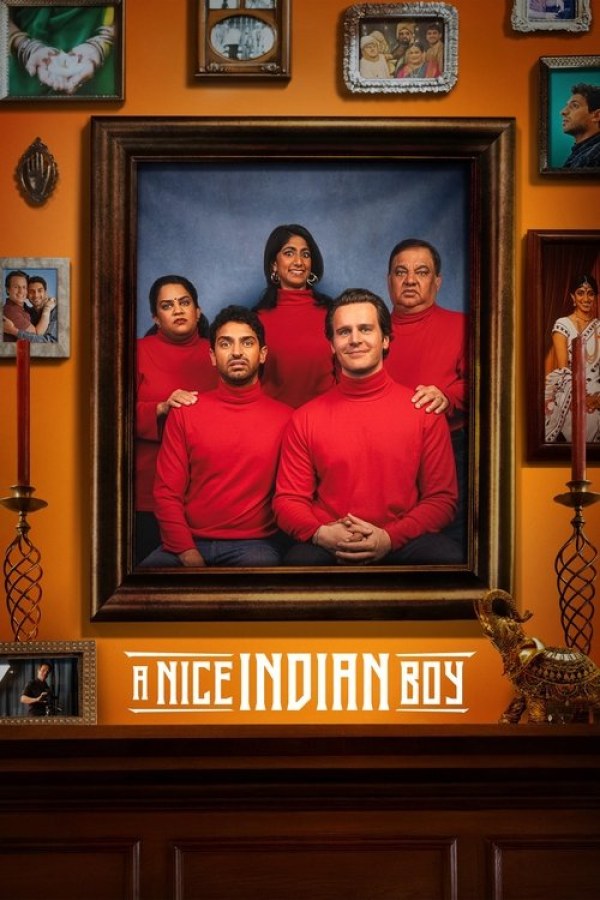
🎬 A Nice Indian Boy
🎬 A Nice Indian Boy is the warm, complicated embrace of family and the search for cultural belonging. Naveen, a cautious and traditional-at-heart doctor, finally finds the man of his dreams: Jay, a white man who happens to be more obsessed with Bollywood, Indian food, and South Asian traditions than Naveen himself. When Naveen brings Jay home to meet his parents, the story moves beyond simple acceptance and dives into the friction of expectations—specifically how his parents handle a "nice Indian boy" who isn't actually Indian.
The atmosphere is joyful, colorful, and deeply sincere. While it pays homage to the grand romances of Yash Chopra films, it remains grounded in the quiet, sometimes painful reality of a queer person navigating a space where they don't want to choose between their heritage and their partner. The viewer feels the tender tension of a family trying to modernize their love without losing their roots. It is a story about identity and performance—who we pretend to be for our parents and who we are allowed to be when the music starts. It feels like a celebration of "Desi" culture seen through a prism of pride and laughter.
Did you know? (Czy wiesz, że...)
Star Power Duo: The film stars Karan Soni (known as Dopinder in Deadpool) and Jonathan Groff (Broadway legend and star of Mindhunter and Hamilton). Their chemistry was praised for being both hilariously awkward and genuinely sweet.
From Stage to Screen: The movie is an adaptation of a 2014 play. Director Roshan Sethi (who also directed 7 Days) brought his signature sharp, comedic wit to the screenplay to ensure the jokes landed as well as the emotional beats.
Zarna Garg’s Breakout: Stand-up comedy sensation Zarna Garg plays Naveen’s mother, bringing her real-world "Indian Mom" comedy persona to a more dramatic and nuanced role that serves as the film's emotional anchor.
Cultural Reversal: One of the film's funniest and most touching elements is Jay (Groff) being a "Bharatophile"—he knows more about Bollywood choreography and Hindi film trivia than the protagonist, leading to a unique commentary on cultural appreciation versus appropriation.



Comments
No comments yet. Be the first!
Leave a comment