🎬 Heute oder morgen
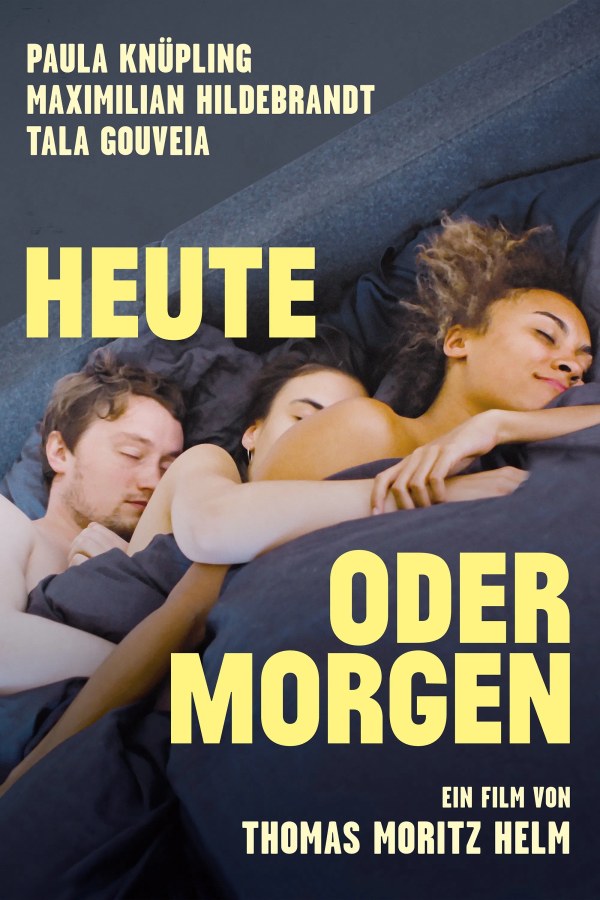
🎬 Heute oder morgen is the fear of commitment disguised as the celebration of freedom. The film follows Maria and Niels, a young, attractive couple living in Berlin who spend their summer in a state of hedonistic drifting. They decide to open their relationship, inviting a third person, Chloe, into their lives.
The atmosphere is sensual, hazy, and aimless. The cinematography uses natural light to create a "dream-like" summer aesthetic where time seems to stand still. The viewer feels the electric chemistry between the three leads, but also the underlying anxiety of the "what comes next?" It is a story about the fragility of youth; it explores the paradox of having endless choices and yet feeling paralyzed by the thought of making the wrong one. Emotionally, it feels like a long, warm weekend that you know must eventually end, leaving a bittersweet aftertaste of nostalgia for a present that hasn't even passed yet.
Did you know? (Czy wiesz, że...)
Berlin as a Character: The film is a love letter to the "Berliner Sommer." It moves through parks, clubs, and rooftops, capturing the specific urban energy of the city's queer-friendly and bohemian subcultures.
Improvisational Style: Much of the dialogue feels unscripted, as Helm encouraged the actors to live in the moments rather than hit rigid plot points. This gives the film its "mumblecore" quality.
Breaking the Binary: The film is notable for its casual, non-judgmental portrayal of polyamory and sexual fluidity. It doesn't treat the threesome as a "problem" to be solved, but as a natural extension of the characters' curiosity.
The Soundtrack: The music plays a vital role in setting the mood, featuring indie and electronic tracks that mirror the heartbeat of Berlin’s nightlife.



Comments
No comments yet. Be the first!
Leave a comment