In the realm of contemporary world cinema, few filmmakers polarize audiences, critics, and their own actors quite like Abdellatif Kechiche. The Tunisian-French director has built a reputation as a cinematic extremist—a creator capable of capturing moments of breathtaking, transcendental human truth, but often at the cost of an exhausting, controversial, and deeply demanding production process.
For the QueerFilmHub community, Kechiche is a monumental figure. He directed the most commercially successful and globally recognized lesbian epic of the 21st century. Whether you view his work as a masterpiece of radical empathy or a manifestation of the intrusive male gaze, his impact on the queer cinematic landscape is undeniable. Here is a look at the intense, tactile world behind his lens.
1. The Cannes Explosion: Blue Is the Warmest Colour (2013)
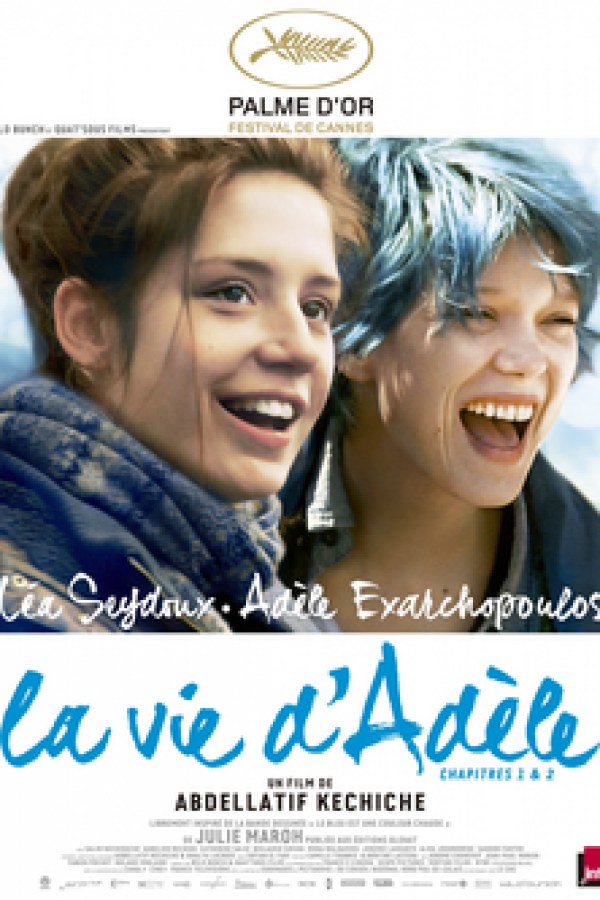
Kechiche etched his name into film history with Blue Is the Warmest Colour (La Vie d'Adèle – Chapitres 1 & 2, 2013). The three-hour epic follows Adèle (Adèle Exarchopoulos), a working-class teenager who undergoes a profound sexual and emotional awakening when she falls into an all-consuming, years-long romance with Emma (Léa Seydoux), an older, blue-haired art student.
The film caused a historic sensation at the Cannes Film Festival. In an unprecedented move, the jury—led by Steven Spielberg—awarded the prestigious Palme d'Or jointly to Kechiche and his two leading actresses, recognizing that the film's power was a symbiotic achievement. The movie became a global cultural phenomenon, praised for its raw, unfiltered depiction of first love, class divides, and the agonizing heartbreak of growing apart.
2. The Controversy of the Narrative and the Set
Despite the critical adoration, Blue Is the Warmest Colour remains one of the most hotly debated films in the queer community. Following its release, both Seydoux and Exarchopoulos spoke out about Kechiche’s brutal directorial methods, describing the set as toxic and exhausting. They revealed that Kechiche forced them to shoot the film's highly explicit, lengthy sex scenes over several grueling days, leading to intense debates about the boundaries of directorial authority.
Furthermore, the film faced criticism from queer theorists and the author of the original graphic novel, Julie Maroh. Many argued that the film's intimate scenes felt designed for a voyeuristic, straight male gaze rather than an authentic lesbian perspective. This ongoing debate makes Kechiche’s work an essential case study for QueerFilmHub readers regarding ethics, representation, and authorship in queer media.
3. The Aesthetic of Obsessive Realism
To understand Kechiche's style is to understand his obsession with time and the human body. He despises traditional Hollywood editing and pacing. Instead, he uses long, unedited takes and a fluid, hand-held camera that stays inches away from his characters' faces.
Kechiche is fascinated by the visceral, animalistic nature of being human. His camera lingers obsessively on people eating, crying, sleeping, laughing, and sweating. He believes that true psychological depth is found in these unpolished, everyday biological rhythms. This hyper-realism makes his films—such as The Secret of the Grain (2007) or his Mektoub, My Love series—feel incredibly alive, immersive, and sometimes claustrophobic.
4. The Alchemist of Fresh Talent
Whatever criticisms are leveled at his methods, no one can deny Kechiche's extraordinary gift for discovering and mentoring young acting talent. He has a rare ability to strip away any trace of theatricality or self-awareness from his performers, coaxing out raw, career-defining performances.
His direction of a then-unknown Adèle Exarchopoulos remains one of the greatest feats of actor-director collaboration in modern memory. Kechiche molds his scripts around the real-life habits, voices, and personalities of his actors, blurring the line between the performer and the character until they become entirely inseparable on screen.
5. Analyzing Class and the Immigrant Experience
While Blue Is the Warmest Colour is primarily remembered for its romance, Kechiche’s broader filmography is deeply rooted in examining the socio-economic realities of working-class and North African immigrant communities in France. His debut Poetical Refugee (2000) and the acclaimed Games of Love and Chance (2003) deal heavily with identity, language, and systemic barriers.
Even in Blue, class is the invisible villain that destroys the central relationship. Kechiche brilliantly contrasts Adèle’s working-class family (who eat spaghetti and value stable, traditional jobs) with Emma’s bourgeois, intellectual family (who eat oysters and discuss philosophy). Kechiche uses his lens to show that even the most passionate love cannot easily survive the quiet, insidious friction of class warfare.
The Verdict
Abdellatif Kechiche is a complex, deeply flawed visionary of modern cinema. He challenges the QueerFilmHub audience to grapple with a difficult question: Can we separate a monumental piece of queer art from the controversial methods used to create it? By bringing lesbian romance into the absolute mainstream of global arthouse cinema with unmatched physical and emotional gravity, Kechiche created a flawed, beautiful, and eternal monument to the ecstasy and agony of love. 🚀🌈🎬