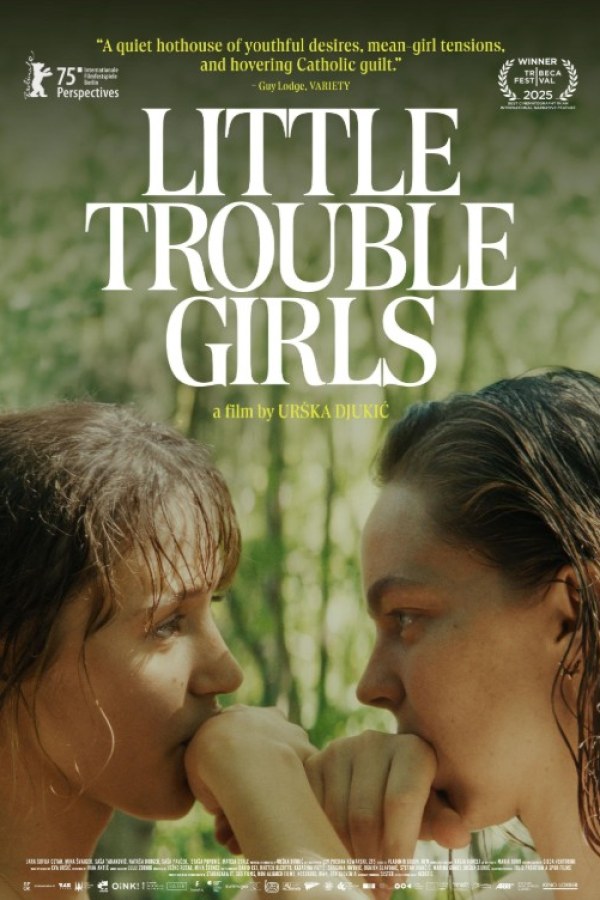
🎬 Little Trouble Girls
Little Trouble Girls (2025) is an exceptionally delicate, atmospheric, and haptic independent drama that adds a vital, high-prestige layer of European sapphic representation to the QueerFilmHub.com master catalog. Moving entirely away from standard American high school clichés, the film crafts an intimate, tactile portrait of burgeoning female desire testing the boundaries of rigid spiritual systems. The narrative follows Lucija (Jara Sofija Ostan), a shy, introverted 16-year-old student who lives a sheltered life under the watchful eye of a strict Catholic school. Seeking a sense of belonging, Lucija joins the institution's all-girls choir, where her world is instantly decentralized by her physical proximity to Ana-Marija (Mina Švajger), a popular, fiercely confident, and self-assured older classmate.
The fragile dynamic shifts from basic teenage friendship to intense psychological and physical longing when the choirmaster (Saša Tabaković) takes the girls to a rural, isolated countryside convent for an intensive rehearsal retreat.
Confined within the stone walls of the monastery, Lucija undergoes a volatile sexual and emotional awakening. She finds herself caught in a dizzying psychological labyrinth: deeply infatuated with the magnetic Ana-Marija, subtly distracted by the bare-chested workmen restoring the convent courtyard, and deeply influenced by the rapturous, religious devotion preached by the local nuns. Director Urška Djukić handles the building tension masterfully, weaponizing the soaring, ecstatic choral harmonies to mirror the internal tremors of adolescent desire. Ultimately, Little Trouble Girls beautifully captures the universal, breathless confusion of a young woman discovering that the true rhythm of her body and her heart cannot be contained by orthodox dogma, resulting in an unmissable, summery piece of modern queer cinema.
💡 Did You Know? (Czy wiesz, że?) 🧠
From Animated Glory to Live-Action Brilliance: Director Urška Djukić is a powerhouse voice in European cinema. Before stepping behind the camera for her live-action feature debut here, she won the highly coveted European Film Award for her phenomenal, deeply impactful animated short Granny's Sexual Life.
The Musical Title Origin: While the international English title is a direct shout-out to Sonic Youth’s iconic 1995 track, the original Slovenian title (Kaj ti je deklica) is named after a legendary Slovenian folk song that translates directly to "What's wrong, girl?"—a perfect theme for Lucija's internal emotional isolation.
A Visual Sweep of the Circuit: The film took the international festival market by absolute storm. Following its triumphant world premiere at the 2025 Berlinale—where it won the prestigious FIPRESCI Critics' Prize—it conquered the Tribeca Film Festival (winning Best Cinematography) and swept the Festival of Slovenian Film, taking home Best Film, Best Actress, and Best Cinematography.
Intimate Soundscapes: To match the haptic visual language of the movie, the sound design relies heavily on amplified close-up recordings of deep breathing exercises, rustling clothes, twirling hair, and hushed, suppressed giggles, trapping the viewer directly inside the girls' personal space.



Comments
No comments yet. Be the first!
Leave a comment