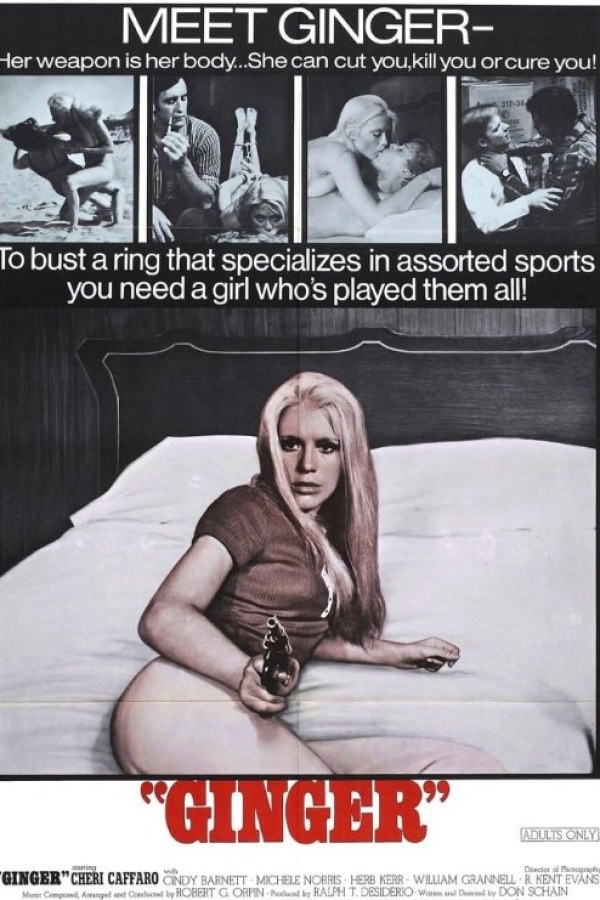
🎬 Ginger
🎬 Ginger is one of brazen, gritty rebellion and rough-edged empowerment. Set against the sleazy backdrop of the early 70s, the film follows Ginger, a wealthy society girl turned undercover agent, as she infiltrates a drug and prostitution ring. Unlike the polished female leads of today, Ginger is a product of her time: she is tough, sexually aggressive, and unapologetically violent.
The atmosphere is raw and uncompromising. The film feels cheap and "dirty" in its production (often filmed in actual motels and on the streets of New Jersey), which adds to its sense of dangerous authenticity. The viewer experiences a jarring mix of exploitation-style voyeurism and the thrill of seeing a woman dominate her male enemies. Emotionally, it is a high-octane "revenge" fantasy—Ginger isn't just solving a crime; she is dismantling a corrupt male system using every weapon at her disposal, including her sexuality and a legendary piano-wire scene. It is a time capsule of the "midnight movie" culture, where the emotions are as loud and unsubtle as the action.
Did you know? (Czy wiesz, że...)
The Ginger Trilogy: This film was such an "unlikely hit" that it spawned two sequels: The Abductors (1972) and Girls Are for Loving (1973), all starring Cheri Caffaro.
Real-Life Romance: Director Don Schain and lead star Cheri Caffaro actually married shortly after making this film. Schain would go on to produce much of her later work.
Underground Icon: Cheri Caffaro became a cult priestess of the grindhouse circuit. She was often compared to Brigitte Bardot due to her blonde hair and "no-nonsense" screen presence.
Extreme Content: For its time, the film was considered highly provocative. One of its most famous (and gruesome) scenes involves Ginger using a piano string to threaten a villain with castration—a moment that solidified the film's reputation in the exploitation genre.



![🎬Compulsion [2024]](/uploads/posters/poster_6aa2485dd214b8.96607439.jpg)

Comments
No comments yet. Be the first!
Leave a comment