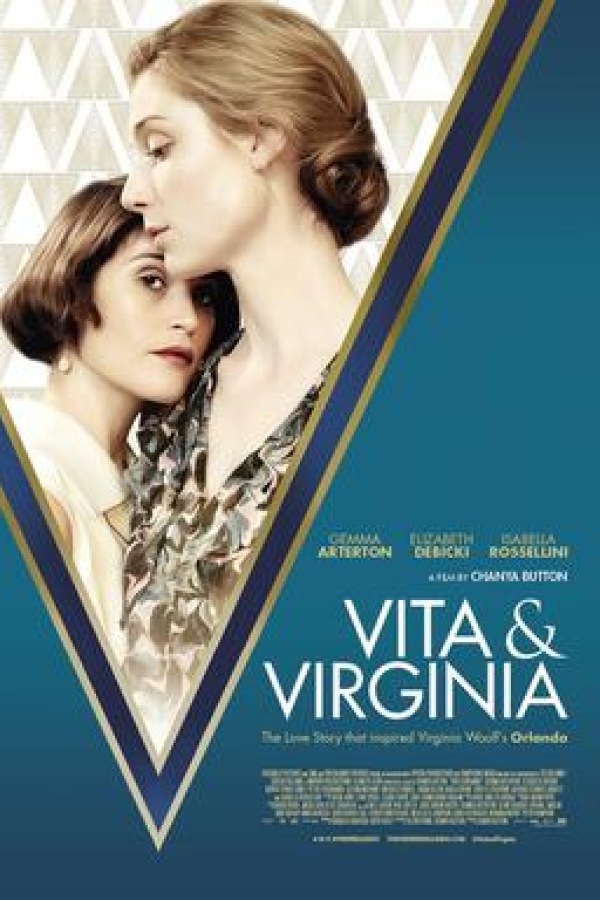
THE ECLIPSE OF GENIUS: Why Vita & Virginia is a Sensory Feast of Queer Literary History
Period dramas detailing the lives of the Bloomsbury Group often fall into a predictable rhythm of velvet drapes, ticking clocks, and hushed, polite drawing-room whispers. However, director Chanya Button’s Vita & Virginia (2018) actively violently rejects the stuffy, museum-piece aesthetic. Adapted from Eileen Atkins’ acclaimed stage play, which was itself drawn entirely from the real-life love letters and diaries of its subjects, this biographical romantic drama transforms a historical footnote into a pulsing, hyper-stylized testament to the birth of a queer masterpiece.
By framing the relationship between two of the twentieth century’s most brilliant writers not just as a physical affair, but as a colossal collision of intellect and desire, Button delivers an intoxicating independent film that celebrates female autonomy and artistic creation.
The Narrative: A Magnetic Inversion of Power
The film unfolds in the roaring, avant-garde social circles of 1920s bohemian London, chronicling the unlikely intersection of two women who occupied entirely different spheres of prominence.
Vita Sackville-West (played with a roaring, predatory charisma by Gemma Arterton) is a wild, aristocratic poet, socialite, and unapologetic sapphist. She moves through the world with immense sexual confidence, openly manipulating the terms of her unconventional, open marriage to diplomat Harold Nicolson. Vita is a woman who takes what she wants—and what she wants next is the elusive, fiercely brilliant Virginia Woolf.
Virginia Woolf (portrayed with a staggering, bird-like fragility and towering intellect by Elizabeth Debicki) is the undisputed crown jewel of the modernist literary scene. Living under the protective, deeply loving custody of her husband Leonard, Virginia fights a constant, exhausting battle against her own fractured mental health, terrified of the manic episodes that threaten to consume her.
When Vita sets her sights on Virginia, it triggers a fascinating psychological game. Vita represents the tangible world—flesh, earth, confidence, and uninhibited passion. Virginia represents the ethereal—words, thoughts, shifting realities, and terrifying depth. What follows is a mutual conquest that forces both women to redefine the boundaries of their marriages, their identities, and their art.
The Aesthetics: Electronic Pulses and Literary Pointillism
What sets Vita & Virginia entirely apart from traditional historical cinema is its radical formal choices. Director Chanya Button choices to convey the electric, modern nature of their bond by tearing down the fourth wall of the 1920s.
The film relies heavily on a distinct visual and sonic language:
The Techno-Infused Score: The entire film is anchored by a pulsing, contemporary electronic soundtrack by Isobel Waller-Bridge, translating the erratic, exciting heartbeat of infatuation into modern rhythms.
Direct-to-Camera Letters: When reading the actual correspondence between Vita and Virginia, the actresses look directly into the lens, transforming historical documents into deeply intimate, urgent monologues delivered straight to the viewer.
Visual Pointillism: The camera lingers heavily on the exquisite micro-interactions—the brush of a hand against silk, the smoke of a cigarette curling between lips, and the terrifyingly intense eye contact during intellectual sparring matches.
Performances: A Career-Defining Duality
Gemma Arterton delivers a wonderfully tactile performance as Vita. She embodies the character's lavish, careless privilege, making it entirely believable that she could sweep anyone into her orbit. Yet, Arterton brilliantly handles the moment Vita realizes she is intellectually outmatched by the woman she sought to conquer.
Elizabeth Debicki, however, completely steals the film. Her portrayal of Virginia Woolf is a masterclass in controlled vulnerability. Debicki captures the sheer agony of a mind that moves too fast, showing how Vita’s touch acts as both a dangerous trigger for Virginia’s mania and the ultimate grounding catalyst that allowed her to write her legendary, gender-bending masterpiece, Orlando. The scene where Virginia conceives the book while watching Vita change garments is pure, transcendent cinematic magic.
The Verdict: A Bold, Unapologetic Triumph
Vita & Virginia is a beautiful, deeply satisfying exploration of how pain, passion, and queer desire are forged into timeless literature. While purists may balk at the electronic music and highly stylized visual poetry, it remains an essential watch that honors the radical, forward-thinking spirit of the women who lived it.
Rating: 🌟🌟🌟🌟 (4 / 5)