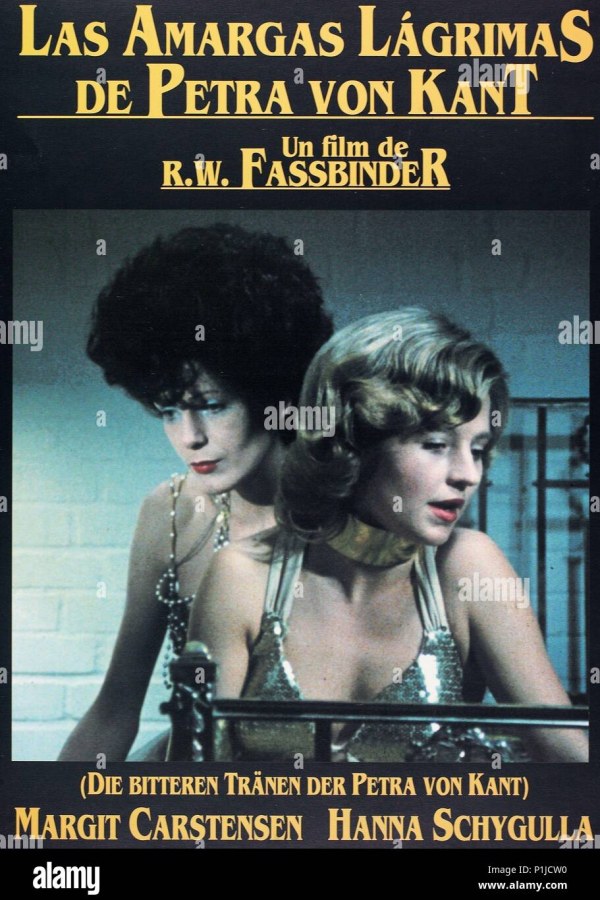
Petra von Kant is an arrogant, successful fashion designer living in a lavishly decorated, claustrophobic Bremen apartment. Supported by her silent, endlessly obedient assistant Marlene—whom Petra treats with cold, casual cruelty—Petra lives a life governed by aesthetic perfection and performative control. Her world breaks wide open when her friend Sidonie introduces her to Karin Thimm, an alluring, working-class young woman aspiring to become a model. Smitten, Petra invites Karin to move in, promising fame and wealth in exchange for devotion. As Karin leverages Petra's obsessive affection for her own career ambitions, their dynamic rapidly descends into a harrowing psychological power struggle, exposing the tragic mechanics of unrequited love and emotional exploitation.
Thematic & Cinematic Analysis
An Unforgiving Anatomy of Power and Possession: Adapted from his own stage play, Fassbinder uses an all-female cast to dissect how emotional relationships mirror capitalist exploitation. Love in Petra’s world is never purely unconditional; it is transactional, weaponized, and inextricably bound to dominance, vanity, and control.
Masterful Stagecraft and Cinematic Geometry: Shot entirely within a single room over ten days, the film turns its confined setting into a visual masterpiece. Michael Ballhaus’s revolutionary cinematography utilizes slow pans, layered reflections, and strategic framing through mannequins and a giant reproduction of Nicolas Poussin's Midas and Bacchus, visually reinforcing Petra's imprisonment within her own desire.
Theatrical Costuming and Emotional Metamorphosis: Fashion serves as an active narrative force. Margit Carstensen shifts through increasingly elaborate wigs and avant-garde gowns as Petra's facade of cold sophistication deteriorates, culminating in a raw, unadorned emotional breakdown on her bedroom floor.
Tour-de-Force Ensemble Performances: Margit Carstensen gives a career-defining performance as Petra, capturing the agonizing arc from haughty cruelty to pathetic, desperate vulnerability. Hanna Schygulla plays Karin with effortless, calculating charm, while Irm Hermann’s voiceless performance as Marlene delivers one of the most haunting, quietly tragic endings in modern cinema.
Verdict
The Bitter Tears of Petra von Kant is a monumental triumph of 1970s European cinema—a devastating, visually extraordinary chamber drama that cements Rainer Werner Fassbinder’s genius. Sharp, claustrophobic, and emotionally unsparing, it stands as a cornerstone of queer cinema and a timeless critique of human vulnerability.
🌟 CRITIC'S VERDICT 🌟
9.8/10 — A Masterpiece of Melodrama and Psychological Warfare
“Rainer Werner Fassbinder crafts a terrifyingly beautiful, razor-sharp exploration of love, power, and isolation. Driven by Margit Carstensen’s luminous performance and Michael Ballhaus’s sublime cinematography, 'The Bitter Tears of Petra von Kant' remains an indelible high-water mark of modern cinema.”