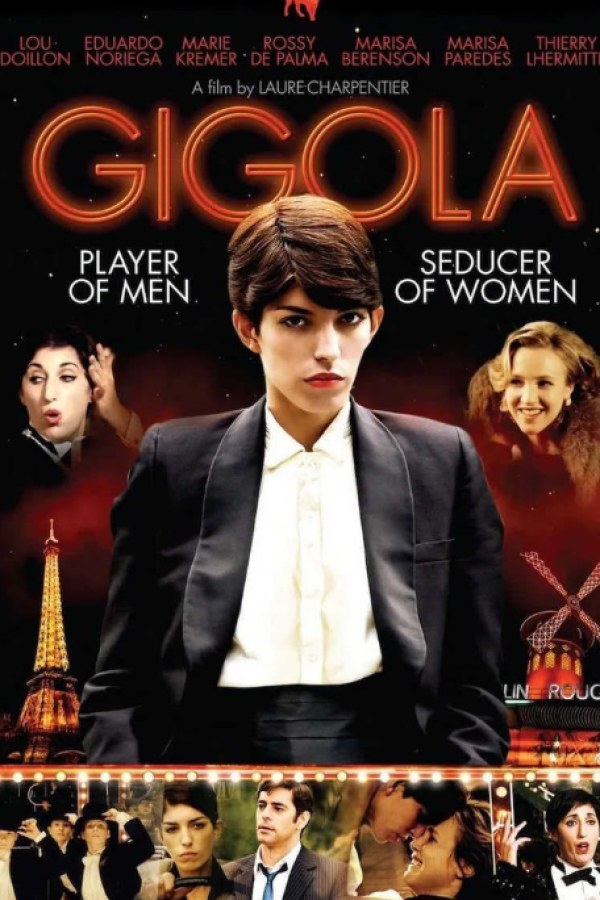
Directed by: Laure Charpentier
Starring: Lou Doillon, Marisa Paredes, Rossy de Palma, Thierry Lhermitte, Eduardo Noriega
Genre: Drama / LGBTQ+ / Period / French Cinema
Runtime: 102 minutes
Premise & Narrative
Based on Laure Charpentier’s semi-autobiographical 1972 novel—which went unpublished for decades due to its frank portrayal of sapphic sexuality—Gigola (2010) is a stylish, atmospheric dip into the nocturnal underworld of 1960s Paris.
The story follows George (Lou Doillon), a charismatic young woman who adopts the alias "Gigola." Devastated by the tragic suicide of her wealthy older lover, Sybille, George rejects bourgeois domesticity and embraces a life on the fringes of Pigalle. Donning sharply tailored tuxedos and adopting a confident butch persona, she works as a high-class gigolo for affluent, mature women. As she moves through smoky cabarets, gambling dens, and lush boudoirs, Gigola walks a delicate line between emotional detachment, financial survival, and the search for authentic love.
Themes & Narrative Execution
Subversion of Butch Identity & Gender: Gigola stands out as a rare, unapologetic exploration of butch aesthetics and fluid gender presentation in mid-century Paris. George's tuxedo is both armor and an expression of power.
The Economy of Desire: Charpentier dissects how pleasure, age, and wealth intersect. The film contrasts the financial autonomy George gains through her work with the underlying loneliness of transactional relationships.
Nocturnal Parisian Sanctuary: Pigalle’s underground nightlife is framed not as a place of ruin, but as a sanctuary where marginalized identities escape societal hypocrisy.
Visual & Directorial Style
Making her feature directorial debut adapting her own book, Laure Charpentier imbues Gigola with a sultry, noir-infused sensibility. The cinematography by Giorgos Arvanitis (Eternity and a Day) wraps the screen in rich neon blues, velvety reds, and deep shadows. Anchored by Lou Doillon’s magnetic, cool performance and supporting roles by Almodóvar muses Marisa Paredes and Rossy de Palma, the film exudes European art-house flair.
Verdict
Gigola is an alluring, bold, and visually intoxicating portrait of sapphic liberation and gender subversion. While its episodic structure occasionally slows narrative momentum, its striking aesthetic and landmark representation of butch identity make it a compelling cult entry in modern French queer cinema.
Rating: ⭐⭐⭐½ (3.5/5)
🌐 Read more indie film reviews and director retrospectives on QueerFilmHub.com!
☕ Support independent film coverage on Patronite: https://patronite.pl/