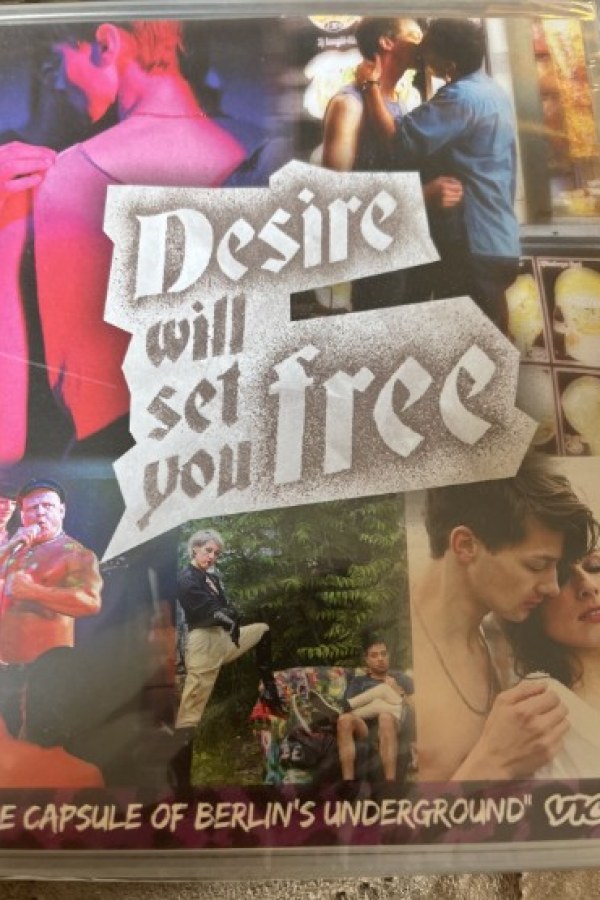
Set in the bohemian, hedonistic landscape of post-wall Berlin, Desire Will Set You Free follows Ezra, an exiled American writer, and Sasha, a Russian-German hustler and aspiring artist. As they drift together through Berlin’s legendary nightlife, subterranean art spaces, and queer clubs, their fragile romance unfolds against a city defined by radical self-expression, fluid identities, and subcultural memory. Merging fictional romance with documentary realism, the film weaves in iconic cameos from real-life counterculture legends, serving as a vibrant portrait of Berlin’s enduring bohemian mythos.
Thematic & Cinematic Analysis
A Love Letter to Underground Berlin: Yony Leyser treats Berlin not merely as a background setting, but as an active, pulsating organism. The film captures the raw energy of famous venues, techno clubs, and art collectives, preserving a snapshot of the city’s post-wall creative sanctuary before the waves of rapid gentrification.
Blurring the Line Between Fiction and Fact: Leyser utilizes a docu-fiction hybrid style, placing real-life queer and punk royalty—such as Peaches, Nina Hagen, Blixa Bargeld, and Rosa von Praunheim—directly into the narrative flow. This creates an immersive experience where performance art and real personal history coexist effortlessly.
Fluidity of Desire and Identity: Refusing conventional narrative arcsFilm: Desire Will Set You Free (2015)
Director: Yony Leyser
Cast: Yony Leyser, Tim-Fabian Hoffmann, Chloe Levray, Peaches, Nina Hagen, Blixa Bargeld
Overview
Yony Leyser’s Desire Will Set You Free is a chaotic, semi-autobiographical love letter to Berlin’s underground queer scene. Part narrative feature, part docu-drama, and entirely steeped in hedonism, the film captures a specific moment in the mid-2010s when Berlin remained an alluring haven for artist-expats, nightlife creatures, and sexual outlaws.
Plot & Atmosphere
setup follows Ezra (played by director Yony Leyser himself), an American writer residing in Berlin, who falls into a relationship with Sasha (Tim-Fabian Hoffmann), a young Russian escort. Their turbulent connection serves as an anchor, but the true protagonist of the film is the city’s nightlife and subculture.
Rather than sticking to a traditional three-act narrative structure, the film flows like a late-night crawl through Berlin’s legendary spots—from darkrooms and queer punk clubs to squatted art spaces and underground performance venues.
Key Highlights
Iconic Cameos & Cultural Cameos:
The film is heavily populated by real-life figures of European counterculture. Seeing icons like Peaches, Nina Hagen, Blixa Bargeld (Einstürzende Neubauten), and Gudrun Gut weave in and out of the narrative gives the project an authentic, archival weight.
Exploration of Queer Identity & Freedom:
The movie wrestles with the double-edged sword of total freedom. It examines how Berlin acts as a sanctuary for those fleeing state-sponsored homophobia (embodied by Sasha's Russian background), while simultaneously questioning whether endless hedonism brings actual