RADICAL JOY IN THE FACE OF MORTALITY: Why Come See Me in the Good Light is a Masterpiece of Queer Resilience
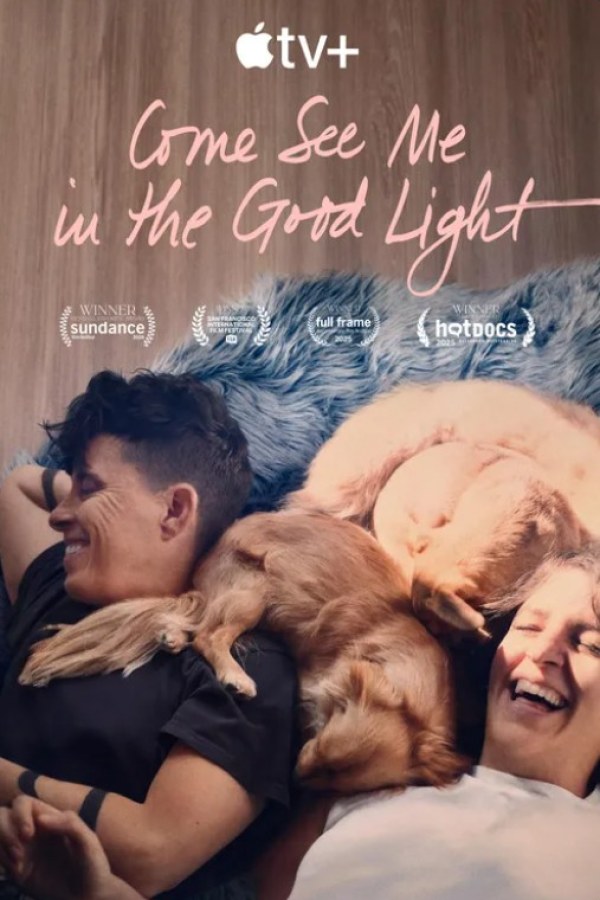
Documentaries tracking a terminal illness diagnosis frequently fall into familiar, agonizing rhythms of tragedy. But with "Come See Me in the Good Light" (20205), director Ryan White crafts an entirely different kind of space—a luminous, deeply intimate, and staggeringly joyful meditation on love, poetry, and what it truly means to be alive.
Premiering to universal acclaim at the Sundance Film Festival where it captured the coveted Festival Favorite Award, this Apple TV+ original documentary centers on the life, art, and final chapters of genderqueer spoken-word poet and activist Andrea Gibson and their partner, poet Megan Falley. It is a film that refuses to let cancer define its narrative, choosing instead to document a love story that treats joy as the ultimate form of defiance.
The Heartbeat: A Love Story Intertwined with Verse
The film unfolds inside the couple's home in Longmont, Colorado, capturing the everyday routines and monumental emotional shifts that followed Gibson's incurable ovarian cancer diagnosis in 2021. Rather than adopting a clinical or overly dramatized lens, Ryan White leans heavily into observation. The camera watches as Andrea and Megan navigate the exhausting reality of treatments alongside sudden, spontaneous dance breaks, late-night philosophical musings, and shared creative breakthroughs.
What binds the entire film together is the sheer lyricism of its subjects. As two highly accomplished wordsmiths, Gibson and Falley don't just speak about their grief; they unpack it, dismantle it, and recreate it through raw, brilliant prose. The documentary functions almost like a living collage, blending quiet, vulnerable household moments with striking readings of Gibson’s most powerful, politically urgent, and radically soft poems.
Behind the Camera: An Unmatched Queer Brain Trust
The production history of Come See Me in the Good Light is a testament to the power of queer artistic community. Conceived by comedian Tig Notaro and producer Stef Willen—both longtime friends of the couple—the project drew an astonishing roster of executive producers, including Glennon Doyle, Abby Wambach, and musical heavyweights Sara Bareilles and Brandi Carlile. Carlile and Bareilles even co-wrote a staggering, bittersweet song with Gibson for the film, titled "Salt Then Sour Then Sweet".
This collective tenderness is felt in every frame. White’s direction ensures the film remains an open door rather than an intrusive lens. He beautifully captures the electric, soulmate-level connection between Andrea and Megan. Hearing them recount the early days of their romance alongside the current, daunting realities of caretaking creates a profound emotional weight that manages to be deeply life-affirming rather than crushing
The Legacy: A Vision Kept in the Best Possible Light
Tragically, while Andrea Gibson lived to see the film's celebratory premiere at Sundance, they passed away in July 2025, just months before the documentary’s wide release on Apple TV+. Knowing this context gives the film an extraordinary, archival significance. It is a permanent monument to a trailblazing queer voice who spent over two decades fighting for LGBTQ+ visibility, mental health advocacy, and radical emotional honesty.
Ultimately, Come See Me in the Good Light acts as its own thesis statement. It argues that even when a body is betraying you, the spirit can remain unyielding. It asks how we choose to face the finite nature of our existence, proving that the most radical thing we can do in the face of despair is to keep loving, keep writing, and keep blowing out candles.
The Verdict: Essential, Life-Affirming CinemaThis is not a documentary about death; it is a masterclass in how to live. Bring your tissues, but expect to walk away feeling deeply fortunate, re-energized, and in complete awe of the artistic and romantic sanctuary Andrea Gibson and Megan Falley built together.
Rating: 🌟🌟🌟🌟🌟 (5 / 5)