1. The Narrative Matrix: The Domestic Fracture of Emerging Adulthood
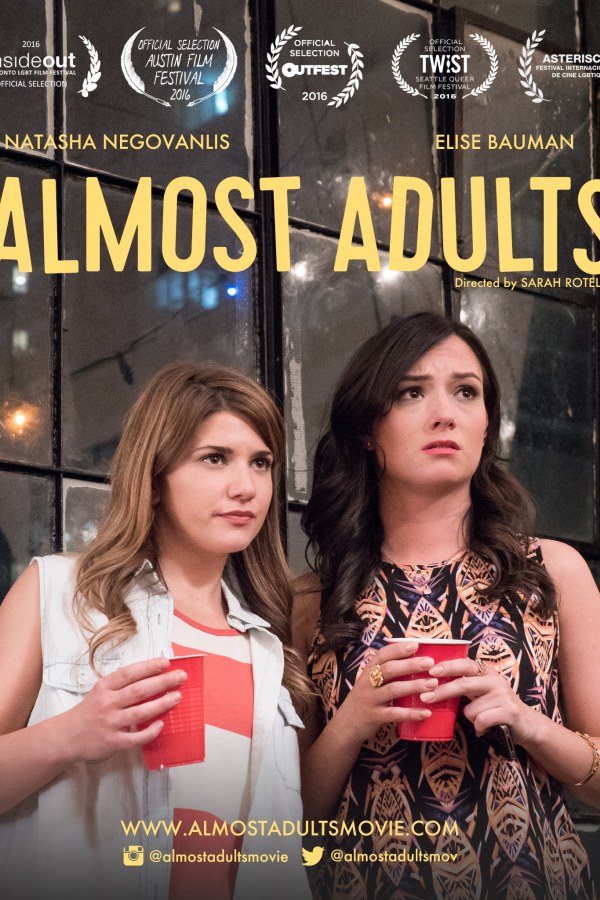
In Almost Adults (2016), director Sarah Rotella constructs a breezy yet structurally sharp biopsy of post-adolescent transition and domestic co-dependency. Set within the final, volatile academic year of university survival, the narrative tracks the changing relationship between lifelong best friends, Mackenzie (Elise Bauman) and Cassie (Natasha Negovanlis). The catalyst for systemic change is Mackenzie’s late coming out, a liberating event that instantly collides with Cassie’s personal existential stagnation following a heterosexual breakup. Rotella entirely avoids the grim, institutionalized trauma that historically formatted 20th-century lesbian narratives, positioning the friction not within the coming-out process itself, but within the heavy psychological labor of outgrowing a childhood friendship matrix.
2. The Visual Syntax: Digital Brightness and Conversational Proximity
The cinematic grammar of Rotella is rooted in a crisp, high-definition digital naturalism that speaks directly to the visual vernacular of the YouTube generation. Working with cinematographer Joshua Fraiman, Rotella embraces a clean, uncompressed aesthetic system that rejects gritty indie filters in favor of communicative clarity.
The Domestic Arena: The camera treats the girls' shared apartment as an elastic, tactical battlefield. The framing utilizes sharp mid-shots and tight conversational angles to amplify the developing emotional and spatial claustrophobia between the roommates.
The Cyberspace Gaze: The technical execution incorporates the omnipresence of modern screens—laptops, dating apps, and social media notifications—treating them not as empty narrative gimmicks, but as active extensions of modern queer identity formation and algorithmic community navigation.
3. Deconstructing the Panopticon of Adult Expectations
What secures Almost Adults its crucial, historic position within the QueerFilmHub contemporary digital archive is its absolute institutional subversion. The film documents a generation of young women who flatly refuse to inherit the rigid, corporate, and heteronormative dating structures of their parents. Mackenzie’s exploration of her desires behaves like a joyous act of domestic sabotage against traditional tracking; she experiments, makes mistakes, and commands her space without asking for external validation. Rotella proves that the ultimate threat to the old, formatted matrix of adulthood is a young woman who refuses to settle for an architecture that does not fit her soul.
4. Conclusion: The Digital Triumph of Direct Representation
Sarah Rotella and writer Adrianna DiLonardo have delivered a vital, fiercely independent, and formally authentic monument to modern queer-pop cinema. Almost Adults stands as an indispensable historical record of the mid-2010s digital revolution, reminding us that true cinematic subversion can wear a colorful, comedic mask. By showing that a marginalized community can directly fund, produce, and celebrate its own representation, the film remains an enduring blueprint for independent contemporary media-makers: the ultimate act of modern defiance is to stop begging the gatekeepers for permission and build your own platform from the ground up.