Riot Grrrl Sonic Abjection, Subcultural Sanctuaries, and the Somatic Rupture of Youth
1. The Narrative Matrix: Hell's Kitchen and the Architecture of Co-Dependency
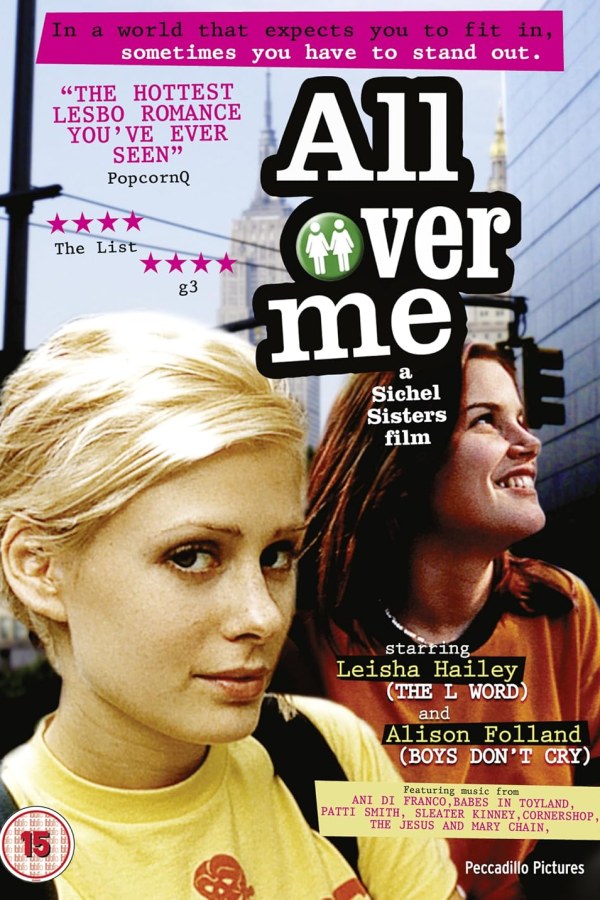
In All Over Me (1997), director Alex Sichel crafts a bruising, hyper-authentic, and fiercely political biopsy of late-90s youth counter-culture. Set against the ungentrified, gritty backdrop of New York’s Hell's Kitchen, the narrative dissects the psychological and physical deterioration of a teenage bond. Claude (Alison Folland), an aspiring queer guitarist, navigates a suffocating emotional entanglement with her best friend Ellen (Tara Subkoff). As Ellen succumbs to the toxic, violent influence of her homophobic boyfriend, Sichel systematically forces the audience to confront the somatic toll of compulsory heteronormativity. The film rejects sanitized coming-of-age formulas, framing Claude’s awakening not as a gentle transition, but as a violent, necessary rupture from domestic and cultural matrixes.
2. The Visual Syntax: Riot Grrrl Aesthetic and Blood-Warm Grain
The cinematic grammar of All Over Me is deeply anchored in the visceral, uncompressed energy of late-20th-century queer independent film. Working with cinematographer Joe DeSalvo, Sichel relies on a saturated, low-budget chromatic intensity—heavy with bruised purples, deep nocturnal blues, and bleeding neon pinks that externalize Claude's internal creative explosion.
The Tactile Camera: The lens maintains a suffocating, hand-held proximity, tracking the characters through cramped apartments, smoky underground clubs, and decaying streets.
The Sonic Friction: The visual language works in a tight dialectical loop with the legendary Riot Grrrl soundtrack. The screams of Babes in Toyland and Sleater-Kinney do not function as simple background ambience; they act as an auditory extension of Claude's unpolished, sovereign desire, slicing through the patriarchal noise of her environment.
3. Deconstructing the Matrix of Urban Isolation
What secures All Over Me its legendary, elite status within the QueerFilmHub archive is its uncompromising portrayal of institutional indifference. The adults are completely checked out, the legal system is absent, and the domestic sphere is a breeding ground for casual violence. In this hostile landscape, Claude’s guitar and her subsequent entrance into the queer underground behave like a direct act of political sabotage. Sichel maps out a physical and creative sanctuary where bodies and desires are no longer policed by corporate or masculine demands.
4. Conclusion: The Loud, Distorted Triumph of the Sovereign Body
Alex Sichel has delivered a vital, fiercely beautiful, and formally defiant monument to independent filmmaking. All Over Me stands as an indispensable historical archive of the 90s alternative explosion, proving that true liberation requires the courage to scream. By showing that a young woman can completely rewrite her destiny through the raw power of sound and self-determination, the film remains an essential, timeless blueprint for contemporary cinema: the ultimate act of modern rebellion is to play your own song, as loud as humanly possible.