Reclaiming the Visceral Architecture of Silence and Caribbean Sovereignty
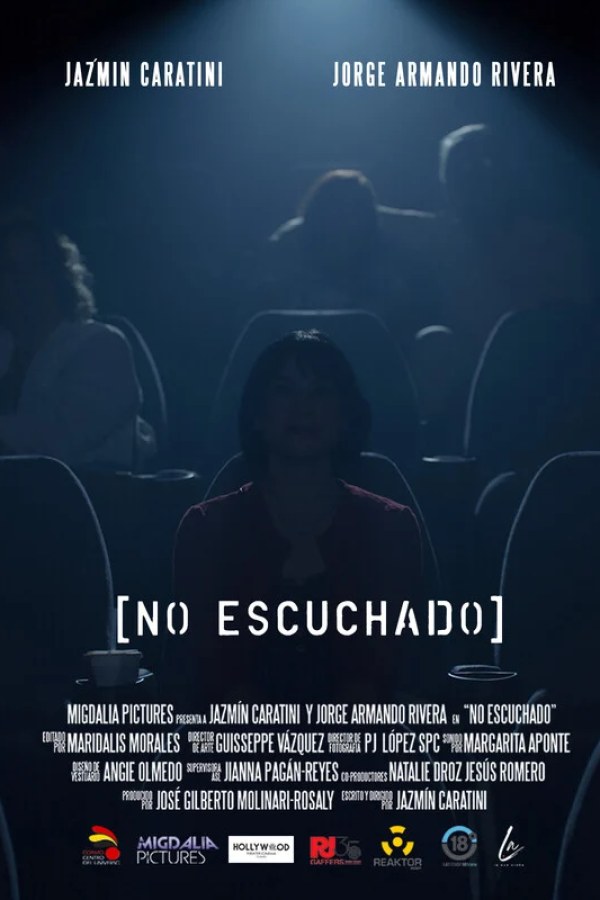
Editorial Note (QueerFilmHub): Puerto Rican powerhouse Jazmín Caratini (La Granja, Una Boda en Castañer, The Pitt) steps into the directorial chair with her fierce new work, "Not Heard". In this exclusive, uncompressed dialogue, Caratini unpacks how her background in criminology shapes her psychological lens, the weaponization of institutional silence, and why independent Caribbean cinema is the ultimate counter-strike against industrialized stereotypes.
Introduction
Dear QueerFilmHub Editorial Team,
Thank you so much for reaching out, and please accept my apologies for the delayed response. It has been a very busy season of filming, parenting, and creating, and I wanted to take the time to answer these questions thoughtfully rather than rush through them. Thank you for your patience, and thank you for the opportunity to be part of this feature. I am truly honored that Not Heard will be highlighted on your platform.
1. The Chameleon's Journey: Human Contradiction Over Genre Blueprint
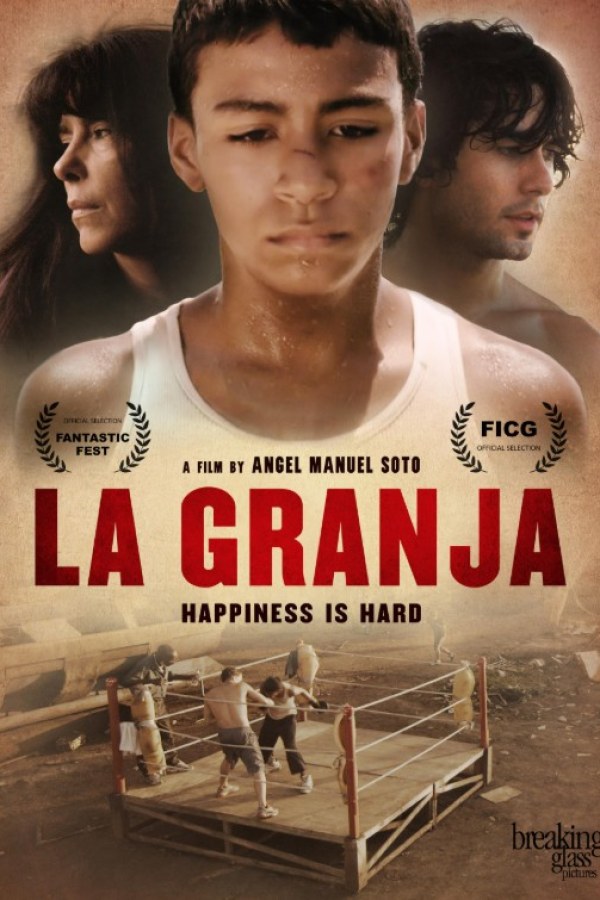
QueerFilmHub: How do you balance navigating through contrasting structural spaces—from warm comedies like Una Boda en Castañer to the pitch-black, socially complex matrix of La Granja—without losing your core narrative agency?
Jazmín Caratini: For me, every character begins with the same question: What makes this person human?
Whether I'm working on a warm comedy like Una Boda en Castañer or something much darker and more socially complex like La Granja, I try not to approach the character through genre. I approach them through their humanity. People are rarely one thing. We can be funny and broken, resilient and vulnerable, all at the same time.
What usually draws me to a script is not perfection but complexity. I am interested in characters who are trying to survive something, protect something, understand something, or heal from something. If I can see a person's contradictions on the page, I immediately want to know more about them. That's usually when I feel that urge to breathe life into a character.
2. The Psychological Lens: Criminology as a Cinematic Tool
QueerFilmHub: Your unique background in criminology is visible in the way you dissect structural tension. How does this scientific understanding of trauma, environments, and social systems format your approach to building a character from the inside out?
Jazmín Caratini: My background in criminology has influenced my work far more than people expect. What fascinated me about criminology was never crime itself. It was people. It was understanding why human beings make the choices they make, how environments shape behavior, how trauma echoes through generations, and how systems can influence individual lives.
When I read a script, I am constantly asking questions beneath the dialogue. What is this character afraid of? What wound are they protecting? What do they need that they cannot say out loud? I feel that's what makes us human. That perspective helps me build characters from the inside out. It reminds me that even the most flawed characters believe they are making sense of their own lives. Understanding that complexity allows me to approach every role with empathy instead of judgment.
3. Shifting the Gaze in Caribbean Cinema: Reclaiming the Visual Archive
QueerFilmHub: Caribbean narratives have historically been filtered through external colonial lenses or sanitized for global consumption. How is the current wave of independent cinema creating an authentic archive of identity, power structures, and representation?
Jazmín Caratini: I think independent cinema is absolutely vital right now. For many years, Caribbean stories were often filtered through external perspectives or reduced to stereotypes. Independent filmmakers are helping reclaim those narratives by telling stories that are more intimate, nuanced, and honest.
What excites me most is that we are seeing films willing to ask difficult questions about identity, family, gender, class, migration, and power structures. They are not always comfortable stories, but they are necessary ones.
For Puerto Rico and the Caribbean as a whole, independent cinema is creating an archive of who we really are, and not who others imagine us to be. That work becomes even more important when it creates space for voices that have historically been overlooked or marginalized.
4. Taking the Helm with Not Heard: Weaponizing the Architecture of Silence
QueerFilmHub: Stepping from acting into the director's chair for Not Heard feels like a radical claim to narrative autonomy. What was the somatic and emotional reality of taking total control over the lens, and how do you examine silence as an imposed social construct?
Jazmín Caratini: Thank you. Not Heard was born from observing how often people (particularly women and children) can feel invisible, even when they are speaking. The story came from a desire to explore what happens when someone's voice is constantly minimized or dismissed. I wanted to examine silence, not as the absence of sound, but as something that can be imposed on people.
Directing the film was both terrifying and liberating. Even now, as I write this, I can still feel a little of that nervousness. As actors, we spend much of our careers serving someone else's vision. There is beauty in that collaboration. But stepping into the director's chair allowed me to ask questions that had been living inside me for years and create a space where those questions could exist visually and emotionally.
It challenged me in every possible way, but it also reminded me that storytelling is not just about performance. It is about perspective. Directing allowed me to share my perspective more completely than I ever had before.
5. Reclaiming the Female Narrative: The Right to be Messy and Imperfect
QueerFilmHub: Industry gatekeepers and corporate platforms frequently pressure female creators to construct "likable" or digestible protagonists. Why must independent spaces like QueerFilmHub fiercely defend the right of female stories to remain uncompressed, flawed, and complex?
Jazmín Caratini: One of the biggest challenges is that there is still often an expectation that female stories should be comfortable. Women are frequently encouraged to be likable, understandable, or inspirational. Real women are much more complicated than that.
The stories that interest me most are the ones that allow women to be messy, conflicted, imperfect, powerful, vulnerable, angry, joyful, and contradictory. In other words, fully human.
The challenge is not only financial access or industry gatekeeping. It is also overcoming assumptions about which stories are considered universal and which stories are considered niche. Platforms like QueerFilmHub play an important role because visibility matters. Independent filmmakers need more spaces where diverse stories can be discussed seriously, celebrated, and preserved. Representation is not only about who appears on screen. It is also about who gets to author the narrative.
6. The Crossover Blueprint: Defying Hollywood's Assimilation Matrix
QueerFilmHub: As you successfully transition into major contemporary projects like Middlehood or The Pitt, what is your ultimate advice for independent creators balancing the thin line between entering global industries and retaining their uncompromised cultural identity?
Jazmín Caratini: My advice would be simple: do not confuse success with assimilation.
The industry will often encourage artists to fit into existing molds, especially when opportunities begin to grow. There is nothing wrong with learning the rules of the business, and I respect that, but I think it is important to remain connected to the experiences, communities, and culture that shaped you. Your uniqueness is not the obstacle. It is THE asset.
The projects that have meant the most to me are not necessarily the ones that reflected my own life, but the ones that trusted me to tell a truthful human story. As actors, our job is to step outside of ourselves and inhabit lives that may be very different from our own. That challenge is one of the things I love most about this profession. At the same time, I believe we should never feel pressured to leave our identity, culture, or perspective at the door in order to succeed.
The goal should never be to become less yourself in order to belong. The goal is to know who you are so well that you can bring authenticity into every room you enter, while still having the freedom to become someone entirely different on screen.
I have been fortunate to work with creators like Michele Palermo on Middlehood and Joe Sachs on The Pitt, people who never treated my Puerto Rican identity as something that needed to be explained, softened, or translated. They simply saw it as part of who I am.
Ironically, some of the biggest questions I've received throughout my career have come from people telling me, "You don't look Puerto Rican," or "You don't act Puerto Rican." My favorite response is usually, "And where are you from?" More often than not, the answer has very little to do with Puerto Rico.
The truth is that there is no single way to look Puerto Rican, sound Puerto Rican, or be Puerto Rican. We are beautifully diverse. If my career has taught me anything, it's that authenticity is far more interesting than stereotypes.
Thank you again for this opportunity and for supporting independent filmmaking. I look forward to sharing this conversation with your readers.
Warmly,
Jazmín Caratini
-----------------------------
QueerFilmHub :
A massive thank you to the brilliant filmmaker and actress Jazmín Caratini for joining us on QueerFilmHub for an exclusive, deeply inspiring conversation! 🎬✨
We had the privilege of breaking down the cinematic boundaries of her latest work, Not Heard, diving straight into the mechanics of somatic truth, independent storytelling, and the unyielding power of self-authorship. This is the raw, uncompressed dialogue contemporary indie cinema truly needs. The full exclusive interview features are now locked into our permanent archive. Dive in via the link below!