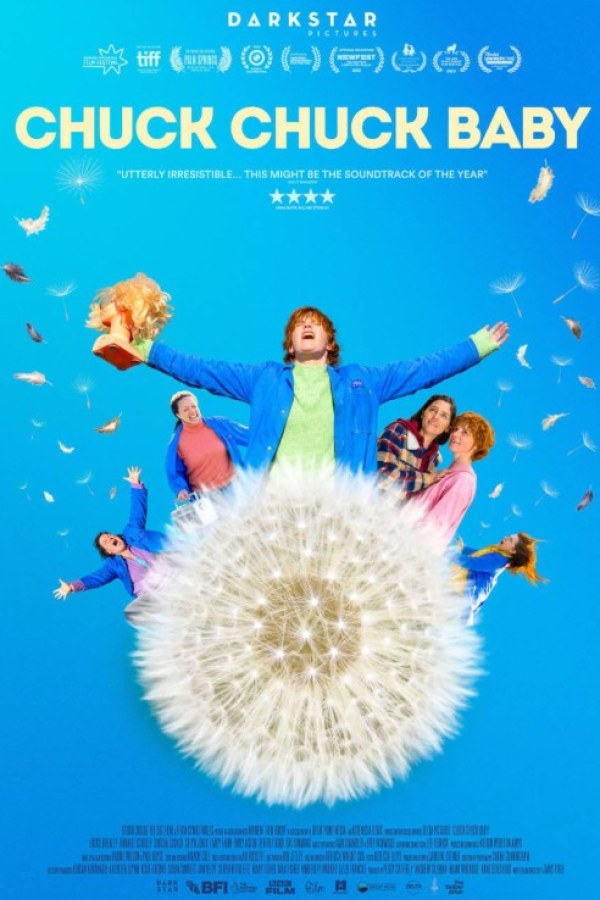
Editorial Introduction: At QueerFilmHub, we systematically reject the sanitized, corporate-approved narratives of mainstream cinema. Today, we present an exclusive conversation with Welsh director Janis Pugh, whose phenomenal feature "Chuck Chuck Baby" (2023) stands as an undefeated masterpiece of contemporary working-class queer storytelling. Operating against a backdrop of institutional neglect and cyclic economic hardship on a Welsh chicken factory floor, Pugh rejects the classic "miserabilist" tropes of British social realism. Instead, she injects her narrative with a radical somatic weapon: unyielding musical joy, female solidarity, and the transformative power of a hard-won happy ending.
1. Deconstructing Social Realism: Music as an Internal Sanctuary
QueerFilmHub: British social realism often falls into the trap of "poverty porn" or bleak, monochromatic misery. In "Chuck Chuck Baby", you subvert this by injecting vibrant colors and musical layers directly into the heavy rhythm of a chicken processing factory. How do you balance the harsh material reality of the working class with this explosive, emotional expressionism without losing narrative authenticity?
Janis Pugh: I’m a working-class girl who grew up in an industrial town, and no matter the situation or hardship we faced, there was always music, laughter, and color. This organic resilience is vital to me when platforming working-class stories. I’m a living part of those narratives, even if my individual experience differs from others.
Through the apparent bleakness, my brain naturally hears music and sees color; I’ve witnessed firsthand how ordinary people utilize music as a tool to navigate love, joy, pain, and grief. It’s an authentic survival mechanism that I’ve always integrated into my work. Crucially, I never want my characters to just burst into song like a traditional, sanitized Hollywood production. For me, it is entirely about the character connecting to a specific track, weaponizing it as a profound way of expressing their internal emotions to their immediate, present situations—honestly, just like we all do in real life.
2. The Somatic Thread of Queer Chemistry
QueerFilmHub: The romantic and physical chemistry between Helen (Louise Brealey) and Joanne (Annabel Scholey) feels incredibly tactile and loaded with history. What was your directorial methodology to build this intense, invisible bond, and how did you guide them to capture a love that has survived years of systemic formatting and personal displacement?
Janis Pugh: Honestly, that profound emotional current came naturally to them both. They shared an incredibly strong, undeniable chemistry from the very beginning of the process, which was amplified by the fact that they are two absolutely brilliant, dedicated actors.
During pre-production, we made sure their structural backstories were rock-solid, giving them an immersive psychological archive to reflect on during every scene. We operated under a beautiful conceptual metaphor: Helen and Joanne were like two ends of a single piece of thread connected since their teenage years. No matter where they went or how fractured their individual lives became over the decades, that internal thread always held them together.
3. The Factory Floor as a Matrix of Solidarity
QueerFilmHub: The community of factory women functions as a Greek chorus of support and raw humor. Could you talk about the political importance of showcasing female solidarity within industrial labor spaces? How does collective humor operate as a defense mechanism against a patriarchal, capitalist environment?
Janis Pugh: I grew up surrounded by these exact working-class women. Their sharp, unvarnished humor was a literal force of nature—a fierce survival and support technique that kept them going through the darkest times.
When constructing Chuck Chuck Baby, it was politically vital that this film didn’t function solely as a standard, isolated romance between two women. It had to be a broader, uncompressed story of love for all women. I wanted to aggressively platform working-class women’s voices and document female love and friendship in all its raw, undefeated forms.
4. Radical Optimism vs. Systemic Doom
QueerFilmHub: Your decision to grant these women an unapologetic, triumphant happy ending feels like a transgressive act in a cinematic landscape that often punishes or idealizes queer working-class pain. Was this narrative choice an intentional counter-strike against the modern world’s cynicism?
Janis Pugh: It was a very conscious, deliberate political choice on my part. I felt an overwhelming sense of doom in the world, and that exact weight is what inspired me to sit down and write this story in the first place. I personally needed uplifting, and I felt the collective world desperately did too.
We must remember that our time on this earth is incredibly short, and the most revolutionary thing we can do against a crushing system is to love and allow ourselves to be loved. In my cinema, I always try to show both the raw beauty and the immense brutality of life side by side, but for me, there absolutely had to be a happy ending for these two women who had already endured so much systemic erasure.
5. The Acoustic Architecture of the Script
QueerFilmHub: The soundtrack—featuring icons like Janis Ian and Minnie Riperton—feels woven into the literal DNA of the characters' thoughts. Could you break down the logistical and artistic friction of integrating these copyrighted emotional anthems directly into the screenwriting stage?
Janis Pugh: For me, the whole script and the music start as a single, unified organism. The songs are never sprinkled on top afterward; they are an active part of the actual screenwriting process. Logistically, this is a massive challenge because there is absolutely no way we could shoot a single frame of the film without securing formal clearance for the music and respecting the incredible artists who wrote those songs.
It takes an immense amount of time to excavate the exact music that functions perfectly for the characters, the story, and the overarching tone. A significant portion of pre-production is spent digging through archives. Because of budget constraints in independent cinema, I always maintain an "A-list" of ideal tracks and a parallel "B-list" of backup tracks—just in case clearing the absolute dream songs becomes too complicated or astronomically expensive. You have to be highly mindful of these industrial boundaries during the research phase.
6. The Ultimate Transgressive Objective
QueerFilmHub: When the lights go down and the credits roll, what is the core ideological takeaway you want to leave within the somatic memory of the audience?
Janis Pugh: I wanted the audience to go home, rip down their fences, and LOVE who they want to LOVE. Because in the end, this world desperately needs love, sovereignty, and hope.
Editorial Note & Acknowledgments:
The QueerFilmHub editorial team extends its deepest gratitude to Janis Pugh for her incredible openness, uncompromising honesty, and for taking the time to share her vision with us in the midst of a demanding casting process. Janis, thank you for fiercely championing working-class queer narratives and reminding us that creative and emotional sovereignty remains the beating heart of cinema. See you on the festival circuit!