As a director, Catherine Breillat approaches cinema not as passive entertainment, but as an uncompromising, clinical dissection of human psychology, power dynamics, and the physical reality of desire. Her relationship with her craft, her actors, and her audience is built on strict intellectual honesty and an absolute refusal to offer comforting cinematic illusions.
1. The Director as a Surgical Observer
Breillat’s camera functions less like an instrument of traditional storytelling and more like a scalpel. She operates within the tradition of auteur cinema, treating the frame as a laboratory to dismantle social taboos, patriarchal mythology, and performative modesty.
Rejection of the Male Gaze: While her filmography is heavily saturated with nudity and sexual themes, Breillat explicitly rejects commercialized eroticism.
Clinical Precision: She favors cool, deliberate framing and static compositions that force the viewer to look directly at the human body without Hollywood gloss, romantic music, or artificial fetishization.
2. Directing Actors: Radical Exposure & Deconstruction
Working with Breillat is widely regarded as one of the most demanding experiences for an actor. She expects total emotional and physical transparency, pushing her cast into spaces of deep vulnerability.
An actor is not merely an interpreter of lines; they are living matter required to confront their deepest anxieties on camera."
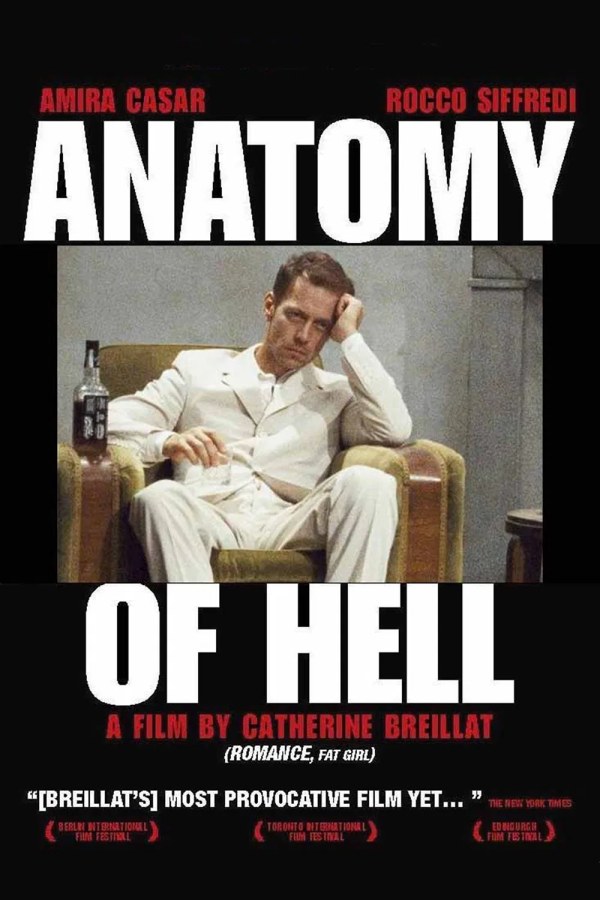
Her most famous casting choices serve her overarching thesis. By casting adult film star Rocco Siffredi in Romance (1999) and Anatomy of Hell (Anatomie de l'enfer, 2004), she systematically stripped away his onscreen persona of dominance, rendering him passive, bewildered, and emotionally exposed under her gaze.
3. The Pact with the Audience: Confrontation Over Comfort
As a pivotal figure in the New French Extremity movement, Breillat establishes a confrontational relationship with her audience. She does not seek approval, affection, or easy consensus.
Instead, she intentionally creates discomfort, using awkward silences, raw physiology, and taboo themes (such as adolescence, bodily fluids, and incestuous dynamics) to test the viewer's moral and aesthetic boundaries. Her films demand that the audience examine why certain images provoke shame, disgust, or anxiety.
4. Reclaiming the Narrative of Female Desire
Ultimately, Breillat's relationship with directing is profoundly political. Throughout her multi-decade career, she has challenged the historical male monopoly on depicting female sexuality. In Breillat’s cinema, female desire is never idealized, passive, or purely tragic—it is dangerous, complex, intellectual, and uncompromisingly autonomous.