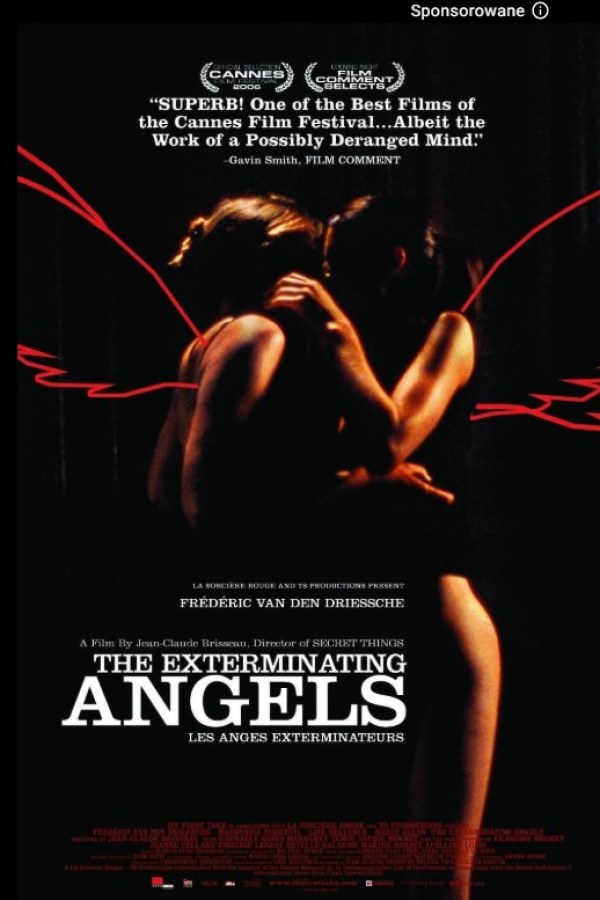
Jean-Claude Brisseau remains one of the most polarizing, fiercely independent, and controversial figures in modern French cinema. A former schoolteacher who entered filmmaking through self-taught passion, Brisseau spent his career operating on the fringes of the industry, creating a singular body of work that constantly clashed with bourgeois morality, political correctness, and institutional dogmas.
His cinema is an intoxicating, often uncomfortable hybrid: a place where rigorous, classical filmmaking techniques meet raw, transgressive thematic content.
The Matrix of Desire and Mysticism
To understand Brisseau is to understand that he never viewed eroticism through a commercial or purely sensationalist lens. For him, sexuality was a metaphysical battlefield. In films like Secret Things (Choses secrètes, 2002), The Exterminating Angels (2006), and A Girl Alone (Chose dangereuse, 2003), desire is weaponized—not just as a tool for personal ambition, but as a radical force capable of shattering social matrices and exposing human hypocrisy.
Brisseau’s characters are frequently driven by an obsessive quest for absolute freedom, attempting to strip away the polite social masks imposed by family, class, and religion. However, this pursuit of liberation almost always carries a steep, tragic price. His protagonists find themselves caught between intellectual control and visceral, untamed instincts, leading to an inevitable psychological deconstruction.
The Director as a Vulnerable Demiurge
A recurring motif throughout Brisseau’s filmography is the figure of the creator or mentor—a demiurge who attempts to orchestrate, analyze, or control the desires of others. This theme became painfully meta-textual in his later career. Brisseau’s clinical obsession with pushing artistic boundaries spilled over into reality, leading to legal controversies that mirrored the very plots of his movies.
Yet, rather than retreating, Brisseau leaned into this friction. His later works became deeply self-reflexive essays on voyeurism, power dynamics, and the inherent vulnerability of the artistic process. He transformed his own cinematic space into a claustrophobic laboratory, forcing the audience to confront their own position as voyeurs.
Style and Legacy
Visually, Brisseau’s style is defined by an austere, almost Bressonian minimalism. He favored long, static takes, precise blocking, and quiet, heavy atmospheres that contrast sharply with the volatile emotions on screen. This deliberate, classical restraint heightens the transgressive nature of his narratives; the shock comes not from frantic editing, but from the cold, unwavering honesty of his camera.
Jean-Claude Brisseau left behind a legacy of cinema that refuses to offer safe passage or easy comforts. He was an auteur who dared to look directly into the abyss of human subconsciousness, treating forbidden impulses not as sins, but as the raw, chaotic core of human authenticity.