Architectural Brutalism, Somatic Disintegration, and the Audio-Visual Panopticon
1. Introduction: The Clinical Architect of Latin American Art-Horror
Gregório Graziosi stands as one of the most aesthetically rigorous, intellectually uncompromising, and formalist voices within contemporary Brazilian cinema. Emerging from a high-art background of short-form documentary and experimental fiction—most notably with his striking debut Obra (2014)—Graziosi systematically avoided the standard, folkloric or socio-political realism often expected from South American exports. For QueerFilmHub, Graziosi operates as a vital master of internal, somatic terror. His lens handles human identity, athletic obsession, and queer desire not through text or dialogue, but through a cold, geometric architecture, turning domestic and institutional structures into physical extensions of a collapsing psychological framework.
2. Formal Signature: Brutalist Grids and the Visceral Acoustic Cage
Graziosi’s directorial system is governed by an absolute, almost clinical control over the sensory apparatus of the viewer, stripping his frames of casual warmth to expose the raw mechanics of human vulnerability.
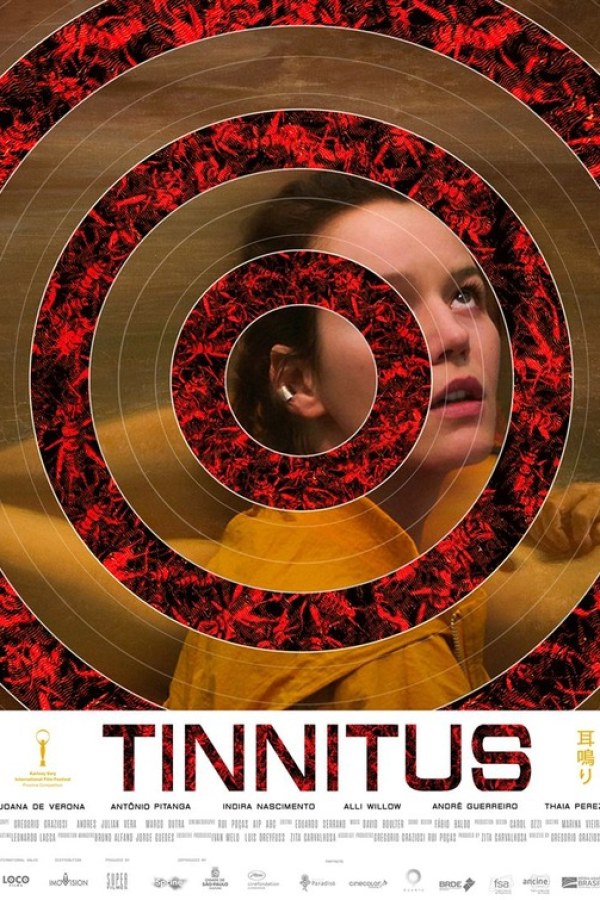
The Architectural Panopticon: In both Obra and his landmark body-horror drama Tinnitus (2022/2023), Graziosi treats space as an active oppressor. He favors the heavy, unyielding concrete lines of Paulista brutalism and hyper-sterile sporting complexes. Characters are routinely framed trapped inside massive structural grids, minor figures paralyzed by the overwhelming geometry of their environment, visualising their absolute societal and psychological entrapment.
The Somatic-Acoustic Matrix: Graziosi rejects standard cinematic scoring. His films operate as a terrifying battlefield between high-contrast, desaturated imagery and a low-frequency, visceral sound design. The camera tracks the human frame with exhausting proximity, focusing on skin tension, muscle failure, and physical performance under extreme stress, while the audio track attacks the audience directly with piercing frequencies and sudden, suffocating silences.
3. Deconstructing the Matrix of Performative and Corporate Extraction
What secures Gregório Graziosi his distinct, high-value territory within the QueerFilmHub conceptual archive is his sharp, relentless deconstruction of the modern demand for biological perfection. In Graziosi’s universe, the capitalistic system treats the individual—and specifically the queer or female body—as an economic instrument that must function flawlessly without error. When his protagonists fail to maintain this artificial synchronization, they face immediate administrative banishment. Graziosi acts as a brilliant saboteur of this tracking, showcasing that the pursuit of genuine intimacy and identity within a sterile, monitored world requires a violent, tragic, and sometimes destructive rebellion against the scripts of public success.
4. Conclusion: The Sovereign Blueprint of Sensory Autonomy
Gregório Graziosi remains an indispensable monument to independent artistic discipline, audio-visual innovation, and narrative uncompromisingness. His expanding creative archive demonstrates that cinema achieves its ultimate power when it stops acting as a passive storyteller and begins operating as a direct assault on the sensory systems of the audience. He stands as a permanent, flashing blueprint for serious modern media-makers: true cinematic impact does not require standard emotional manipulation, but the tactical courage to map out the darkest, quietest, and most terrifying fractures of human existence exactly where the body meets the concrete.