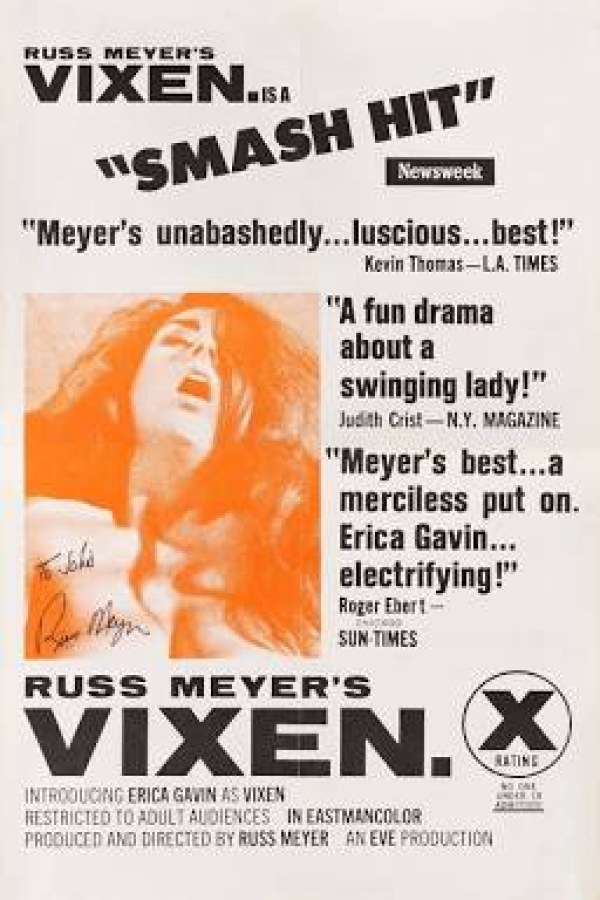
American filmmaker, cinematographer, and editor Russ Meyer stands as one of the most commercially successful independent directors in cinema history. Nicknamed the "King of Sexploitation," Meyer revolutionized low-budget exploitation film in the 1960s and 70s. Armed with World War II combat newsreel experience, a signature camp visual aesthetic, and complete financial independence, he built a self-sustained cinematic empire out of camp, satire, kinetic editing, and larger-than-life heroines.
The Signature Directorial Style: Kinetic Editing, Satire, and High-Camp Sensuality
Meyer’s unique formal technique bridged early WWII documentary camerawork with Pop Art aestheticism:
Rapid-Fire Montage: Influenced by his time as a WWII military combat cameraman, Meyer favored lightning-fast cuts, Dutch angles, extreme close-ups, and hyper-kinetic montage pacing that influenced modern action and music video editing.
Subversion of Traditional Gender Roles: His films turned male power dynamics upside down, featuring assertive, physically commanding, and dominant female protagonists who controlled every room they entered.
Satirical Pop Melodrama: Beneath the outrageous titillation, Meyer’s films featured razor-sharp camp dialogue (often written by critic Roger Ebert) and satirical jabs at suburban hypocrisy, Hollywood clichés, and American Puritanism.
Key Career Milestones & Filmography
The Immoral Mr. Teas (1959): Made on a micro-budget of under $25,000, this comedy grossed over a million dollars, single-handedly launching the "sexply" genre and proving the immense financial viability of indie sexploitation.
Faster, Pussycat! Kill! Kill! (1965): The ultimate cult classic starring Tura Satana as the fierce go-go dancer Varla. Packed with fast cars, desert violence, and iconic camp dialogue, it became a massive influence on directors like Quentin Tarantino, John Waters, and Rob Zombie.
Vixen! (1968): A massive box-office phenomenon that earned millions domestically, solidifying Meyer’s position as a self-financed indie mogul who owned and distributed his own work outside studio interference.
Beyond the Valley of the Dolls (2070): Co-written with film critic Roger Ebert and produced by 20th Century Fox, this surreal, rock-and-roll satire of 1960s Hollywood hedonism became a legendary studio-backed cult masterpiece.
Supervixens (1975) & Up! (1976): High-octane, outrageously violent indie hits that showcased Meyer’s peak technical skill in editing, pacing, and comedic action storytelling.
Where to Explore Russ Meyer’s Legacy
Whether viewed as a pioneer of fast-paced indie editing or a king of 60s pop camp, Russ Meyer remains a singular icon of underground cinema history.
Discover film breakdowns, auteur retrospectives, and cult movie guides on QueerFilmHub. We are dedicated to exploring radical independent cinema, genre pioneers, and unconventional visionaries across film history.
Want to help us continue producing director spotlights, reviews, and indie film breakdowns? Support independent film coverage on Patronite: https://patronite.pl/