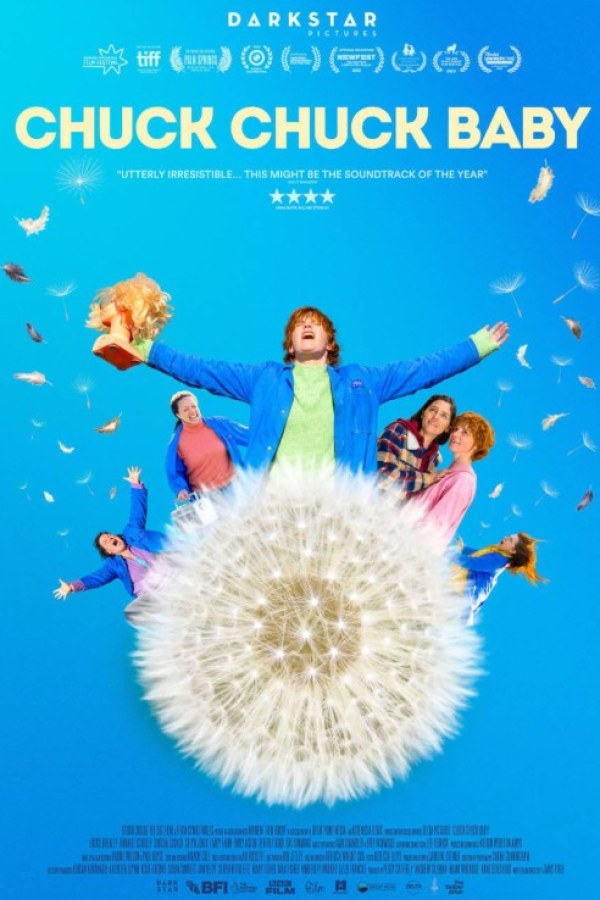
When critics talk about British cinema dealing with the working class, they often use terms like "kitchen-sink realism"—expecting muted colors, depressing storylines, and a heavy sense of social defeat. But Welsh writer-director Janis Pugh completely shatters that grim stereotype. With his breakthrough 2023 feature Chuck Chuck Baby, Pugh proved that the lives of factory workers and small-town queer people can be just as cinematic, operatic, and filled with technicolor joy as any multi-million dollar Hollywood production.
For the QueerFilmHub audience, Janis Pugh is a visionary filmmaker who understands that joy is, in itself, a form of radical resistance. Here is an inside look at the creative philosophy of this brilliant director.
1. Rooted in the Soil of North Wales
To understand Pugh’s directorial voice, one must understand where he comes from. Raised in the industrial, working-class landscapes of North Wales, Pugh grew up surrounded by the exact types of women he portrays on screen.
Instead of leaving his roots behind to chase polished, middle-class stories, he chose to weaponize his upbringing. Pugh spent years listening to the humor, the struggles, and the resilient laughter of working-class women in his community. His background gives his directing a level of effortless authenticity; he doesn't look at the factory floor as an outsider looking in—he frames it with the deep, protective love of someone who knows these spaces intimately.
2. The Power of "Emotional Camp"
Pugh’s signature directorial trait is his ability to seamlessly blend harsh, socio-economic realities with high-concept musical escapism. He calls his style a way to capture the "internal music" of ordinary people.
On set, Pugh directs his actors to treat musical numbers not as silly, theatrical breaks, but as raw extensions of their characters' deepest emotional breakthroughs. When a character in a Janis Pugh film sings along to a retro 1970s pop track, it is treated with the same dramatic weight as a Shakespearean soliloquy. This mastery of "emotional camp" allows him to handle incredibly heavy themes—like domestic abuse, grief, and societal isolation—without ever letting the film lose its uplifting, triumphant spirit.
3. Orchestrating the Female Ensemble
While many queer films focus entirely on the romantic couple, Pugh is obsessed with the wider community. One of his greatest strengths as a director is his orchestration of large, female-led ensemble casts.
In Chuck Chuck Baby, the factory line acts almost like a Greek chorus of ancient theatre, supporting, teasing, and protecting the main characters. Pugh creates a deeply collaborative atmosphere on set, encouraging his cast to build genuine, lived-in camaraderie before the cameras even roll. He directs his background actors with as much precision as his leads, ensuring that every laugh, side-eye, and shared glance feels like a testament to real, unbreakable sisterhood.
4. A Visual Aesthetic of Contras: Gray vs. Glitter
Visually, Pugh works closely with his cinematographers to create a striking dialectic between the mundane and the magical. He intentionally frames the industrial, industrial architecture of North Wales in flat, muted tones to ground the story in a recognizable reality.
But the moment love, passion, or music takes over, Pugh floods the screen with saturated colors, warm lighting, and sudden bursts of glitter and theatrical blocking. This visual whiplash is an intentional directorial tool: it mirrors the internal transformation of his queer protagonists, showing how love literally changes the way a person perceives a bleak world.
5. Giving a Voice to Later-in-Life Queer Awakening
In a media landscape obsessed with youth, Pugh makes a political choice to center his romantic narratives around middle-aged characters. He explicitly champions stories of queer awakening, self-love, and liberation for people in their 40s and 50s.
Pugh directs these narratives with immense patience and maturity. He doesn't rush the romance; instead, he allows his camera to linger on the hesitations, the deep-seated fears, and the heavy emotional armor that adults build over decades of survival. By showing that it is never too late to reinvent yourself, rewrite your story, and fall in love, Pugh provides a beautiful, deeply comforting roadmap for the older segments of the LGBTQ+ community.
The Verdict
Janis Pugh is a filmmaker who uses his camera as a magic wand, transforming the mundane into the magnificent. He reminds us that cinema doesn't need sprawling castles or spaceships to feel epic—sometimes, all you need is a chicken factory, a neon light, a classic pop song, and the courage to love who you want. For QueerFilmHub, Janis Pugh is a brilliant example of how modern queer cinema can remain fiercely political while remaining completely, devastatingly joyful. 🚀🌈🐔