In the sprawling landscape of Indian cinema, where mainstream Bollywood often relies on safe, formulaic plots, Shonali Bose stands as a fearless, revolutionary force. An activist turned filmmaker, Bose has dedicated her career to bringing stories from the absolute margins of society directly to the center of the cinematic frame.
For the QueerFilmHub community, Shonali Bose is nothing short of a pioneer. She is a director who doesn't just push boundaries; she completely erases them, creating a rare cinematic space where queer desire, female autonomy, and intersectionality are treated with radical normalcy and immense joy. Here is an exploration of her extraordinary directorial world.
1. Margarita with a Straw (2014): An Intersectional Masterpiece
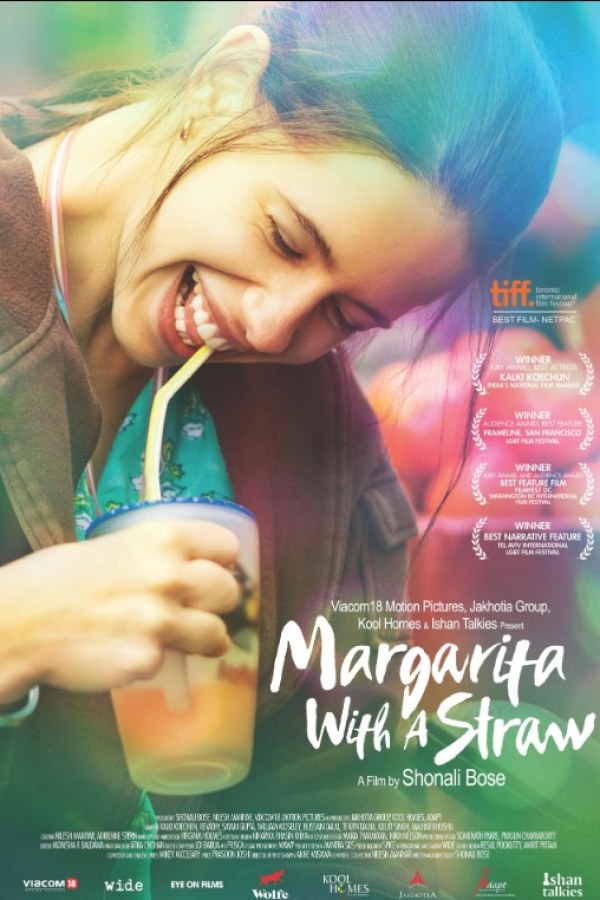
Bose shook the international film circuit and made history with her second feature, Margarita with a Straw. The film follows Laila (played brilliantly by Kalki Koechlin), a vibrant young Indian woman with cerebral palsy who moves to New York for college. There, she embarks on a journey of profound self-discovery, eventually falling in love with Khanum (Sayani Gupta), a blind, fierce activist of Pakistani-Bangladeshi descent.
Before Bose, cinema almost universally treated disabled characters as objects of pity or inspiring, sexless saints. Bose completely demolished this trope. She directed Margarita with an emphasis on Laila’s roaring libido, her flaws, her artistic ambitions, and her right to explore her bisexuality. By centering a romance between a disabled woman and a blind woman of color, Bose delivered one of the most structurally important intersectional queer films ever made, proving that identity is a complex, beautiful tapestry.
2. Personal Loss as a Catalyst for Radical Joy
A defining element of Bose’s directorial voice is her unique relationship with grief and trauma. Her own life was shattered by the tragic, sudden loss of her teenage son, Ishan. Rather than allowing tragedy to silence her, Bose channeled her grief directly into her art, formulating a cinematic philosophy centered on celebrating life while we have it.
This is why, despite tackling incredibly heavy subjects—such as the devastating anti-Sikh riots in her debut film Amu (2005) or terminal illness in The Sky Is Pink (2019)—Bose’s films never feel bleak or cynical. Her camera constantly hunts for light, color, laughter, and human connection. As a director, she possesses a rare gift: she can guide an audience through immense tears and, in the very next scene, make them burst into genuine, life-affirming laughter.
3. The Deconstruction of Traditional Indian Motherhood
In traditional South Asian media, mothers are frequently trapped in strict, predictable roles—either the self-sacrificing martyr or the conservative oppressor. Bose, a fierce feminist, utilizes her directorial platform to radically reconstruct the maternal bond on screen.
In Margarita with a Straw, the relationship between Laila and her traditional Maharashtrian mother (played beautifully by Revathi) is the emotional spine of the movie. Bose doesn't hide the messy friction that occurs when Laila comes out as bisexual to her mother. Instead, she directs their intimacy with deep patience, showing a painful but profoundly beautiful journey of unlearning and unconditional love. Bose reminds us that a mother’s greatest act of devotion is not control, but acceptance.
4. Guerrilla Realism Meets Intimate Visuals
Visually, Bose’s style is grounded in a warm, empathetic realism. She often works with natural light and fluid, close-up cinematography that stays tight on her characters' faces, capturing the smallest shifts in emotion.
Whether she is shooting on the busy, chaotic streets of Delhi or the bustling subways of New York City, Bose ensures that the background environment never overwhelms the human core of the story. Her sets are notoriously collaborative and safe; she spends months doing intensive workshops with her actors, building an unbreakable layer of trust that allows them to perform highly sensitive, emotionally exposed, and physically demanding scenes with absolute authenticity.
5. A Lifelong Activist Behind the Camera
Before she ever picked up a film camera, Bose was a political activist, organizing student protests and studying at Columbia University. This activist DNA is woven into every single frame of her filmography.
Bose uses cinema as a weapon against systemic erasure. She actively fights censorship, pushes for the authentic representation of marginalized groups, and demands that the film industry treat female and queer narratives with the same financial and critical respect as male-dominated blockbusters. She is a reminder that directing is not just an aesthetic job; it is a political responsibility.
The Verdict
Shonali Bose is a visionary filmmaker who leads with her heart, her intellect, and her politics. By refusing to compromise on the complexity of queer and disabled lives, she has provided the QueerFilmHub audience with a masterclass in modern, compassionate world cinema. Her films are essential viewing for anyone who believes that the camera should be used to build a kinder, more inclusive, and radically loving world. 🚀🌈🍹