There are filmmakers who document history, and then there are filmmakers who lived it, bled for it, and then picked up a camera to make sure the world could never look away. David France is the latter. A world-renowned investigative journalist, author, and filmmaker, France has dedicated his life to chronicling the modern LGBTQ+ liberation movement, the AIDS crisis, and the ongoing global battle for queer survival.
For QueerFilmHub readers, David France’s filmography is not just entertainment; it is our collective memory, our trauma, and our triumph captured on celluloid. Here are the defining, revolutionary pillars of his documentary filmmaking.
1. How to Survive a Plague: Turning Tragedy into a Thriller
France’s directorial debut, How to Survive a Plague (2012), is widely considered one of the greatest documentaries ever made, earning an Academy Award nomination. The film captures the early, terrifying days of the AIDS epidemic and the rise of the activist groups ACT UP and TAG (Treatment Action Group).
What makes France's directorial approach unique is that he didn't rely on retrospective, talking-head interviews looking back with nostalgic sadness. Instead, he utilized over 700 hours of raw, archival footage shot by the activists themselves in the late 80s and early 90s. France edited the film like a high-stakes political thriller, showing how a group of dying, marginalized young people self-educated themselves in pharmacology to force the medical establishment to save their lives. It remains the ultimate blueprint for queer resistance.
2. The Death and Life of Marsha P. Johnson: Restoring Trans History
In 2017, France turned his investigative lens toward the foundations of the modern pride movement with The Death and Life of Marsha P. Johnson. The documentary centers on trans activist Victoria Cruz as she attempts to uncover the truth behind the mysterious 1992 drowning of Marsha P. Johnson, a legendary figure of the Stonewall Riots, whose death was quickly and dismissively ruled a suicide by the NYPD.
France structured the film as a dark, neo-noir detective story. By combining true-crime mechanics with historical advocacy, he exposed not only a potential historical murder cover-up but also highlighted the systemic, ongoing epidemic of violence against trans women of color. France successfully forced a modern audience to reckon with the fact that the liberties the queer community enjoys today were built on the backs of trans women who were left unprotected by the state.
3. Welcome to Chechnya: Revolutionary Visual Special Effects for Human Rights
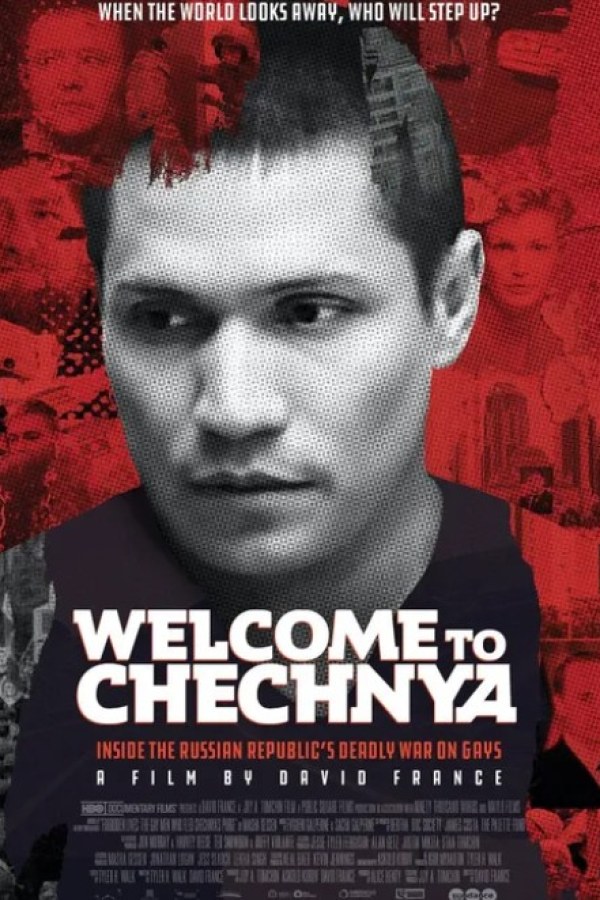
In 2020, France released Welcome to Chechnya, a horrifying and deeply urgent look at the state-sponsored anti-gay purges in the Chechen Republic, where LGBTQ+ individuals are systematically hunted, tortured, and executed.
From a technical and directorial standpoint, this film pulled off a historic cinematic first. To protect the identities of the escapees—whose lives would be immediately ended if discovered—France used cutting-edge AI "face-double" technology (advanced digital cloaking). Instead of blurring the faces or placing them in shadows (which strips away human emotion), France digitally superimposed the faces of volunteer queer activists over the real subjects. This allowed the audience to see genuine tears, fear, and human expressions while completely protecting the survivors, redefining how documentary cinema can be used for safe, high-stakes investigative journalism.
4. The Journalist’s Scalpel: No Easy Sentimentalism
Because France spent decades writing for the New York Times Magazine, The New Yorker, and New York Magazine, his directorial style is completely free of cheap sentimentality or emotional manipulation. He doesn't need to over-dramatize his films because his journalistic research is ironclad.
He approaches editing with a cold, precise scalpel, letting public documents, recorded phone calls, and raw video evidence do the talking. This journalistic rigor makes his films incredibly bulletproof against right-wing detraction; he presents historical truths so heavily backed by evidence that they become undeniable.
5. Capturing the Beauty of Queer Joy Amidst Warfare
Despite the incredibly heavy, traumatic themes of his work—plagues, murders, concentration camps—David France’s films are never purely miserable. A signature element of his directing is his intentional inclusion of queer joy, love, and humor.
In the middle of How to Survive a Plague, he shows activists laughing, flirting, and ballroom dancing in the face of death. In Welcome to Chechnya, he lingers on the quiet, tender moments of safety shared between couples in safehouses. France understands that the ultimate act of queer resistance is not just fighting back, but refusing to let oppression destroy our capacity for love and happiness.
The Verdict
David France is a monumental titan of queer cinema who doesn't just create art—he creates historical records. He weaponizes the camera as an extension of social justice, giving a fierce, articulate voice to our ghosts and an unbreakable armor to our survivors. For the QueerFilmHub community, diving into David France’s filmography is a mandatory rite of passage. It is a masterclass in how cinema can be brave, dangerous, and utterly essential to human survival. 🚀🌈