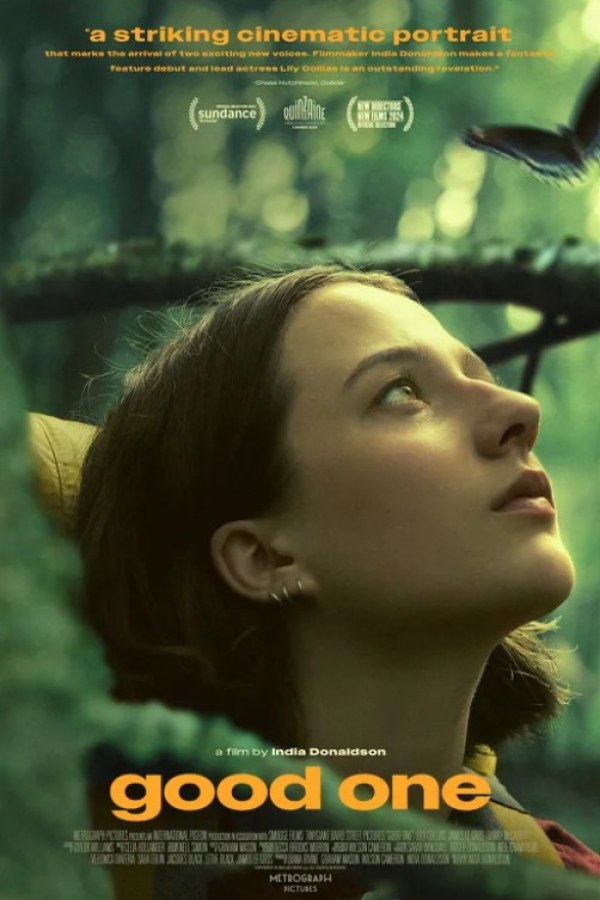
In an indie film landscape often dominated by loud, fast-paced narratives, India Donaldson has emerged as a master of the unspoken. With her stunning 2024 feature directorial debut, Good One, Donaldson instantly solidified her place as a major new voice in American cinema. Her style is defined by extreme emotional maturity, minimalist dialogue, and a rare ability to capture the exact moment a lifetime of trust dissolves between two people.
For QueerFilmHub readers who appreciate art that subverts traditional power dynamics and looks closely at the subtle, everyday friction of gender roles, India Donaldson is an essential auteur to watch. Here are the untold stories behind her creative vision.
1. Filmmaking in the DNA: A Legacy Reimagined
Filmmaking runs directly through India’s veins, but she chose a completely independent path to find her voice. She is the daughter of the well-known Hollywood director Roger Donaldson (the man behind major studio hits like The Recruit, Dante's Peak, and No Way Out).
Growing up around high-budget, action-heavy Hollywood sets, India realized early on that her artistic heart lay in a completely different world. Instead of chasing explosive studio spectacles like her father, she developed a deep love for quiet, character-driven kitchen-sink realism, proving that cinematic tension doesn't require explosions—only human behavior.
2. The Devastating Nuance of Good One
Her debut feature, Good One, follows Sam, a queer-coded, deeply mature 17-year-old girl, as she goes on a weekend backpacking trip in the Catskills with her father and his oldest friend. What begins as a peaceful nature retreat turns into a claustrophobic psychological battlefield when an uncrossable line is stepped over, shattering Sam's perception of the men around her.
The film is a masterclass in tension. Donaldson intentionally avoids giant, dramatic screaming matches. Instead, she explores the subtle weight of casual sexism, ego, and the unfair emotional labor that young women are often forced to carry to keep the peace among men. It is a devastatingly precise critique of patriarchal dynamics disguised as a simple camping trip.
3. A Late-Blooming Autodidact
Unlike many young indie darlings who jump straight from elite film schools into the director's chair in their early twenties, Donaldson took her time. She didn't direct her first feature until her late thirties, having spent years working in various production roles, writing short stories, and honing her observations of human nature.
This patience paid off immensely. Her shorts—like Medusa (2018) and If Found (2021)—served as a crucial training ground where she perfected her signature aesthetic: long, locked-down shots, natural lighting, and a reliance on the actors' faces rather than heavy exposition. Her career proves that maturity and life experience can be a director's greatest creative assets.
4. The Magic of Directing Non-Actors and Breakthrough Stars
One of Donaldson’s greatest strengths as a director is her casting philosophy. In Good One, she paired seasoned indie veterans like James Le Gros with a relative newcomer, Lily Collias, who delivers one of the most breakout performances of recent years.
On set, Donaldson fosters an environment of intense quiet and trust. She allows her camera to linger on the actors after the dialogue ends, catching the tiny, involuntary micro-expressions—a shift of the eyes, a heavy sigh, a stiffening of the shoulders. By giving her actors the space to simply breathe, she coaxes out performances that feel closer to documentary reality than fiction.
5. Weaponizing the Beauty of Nature as a Cage
A fascinating technical aspect of Donaldson's directorial style is how she uses environment. In Good One, the vast, beautiful, open wilderness of New York's forests doesn't feel liberating—it feels intensely claustrophobic.
Working with her cinematographer, Donaldson frames the characters against the massive trees and rocky terrain to emphasize how trapped Sam feels within her social situation. The open air becomes a pressure cooker. This brilliant subversion of the classic "American road trip/nature" trope showcases Donaldson's sophisticated understanding of visual storytelling, using the landscape itself to mirror the internal emotional crisis of her protagonist.
The Verdict
India Donaldson doesn’t shout to get her point across; she whispers, forcing the audience to lean in and listen closely. She is a filmmaker who trusts her audience's intelligence, refusing to over-explain or wrap her stories in neat, tidy bows. For the QueerFilmHub audience, her work is a masterclass in emotional precision and a brilliant blueprint for how modern independent cinema can dissect power, gender, and youth with absolute grace. 🚀🌲