If there is one director who single-handedly placed French-Canadian cinema on the global map, it is Denys Arcand. Over a career spanning more than six decades, the Quebec-born filmmaker, screenwriter, and historian has established himself as the ultimate intellectual provocateur of cinema. His films are distinct: driven by sharp, hyper-articulate dialogue, deeply cynical humor, and a profound, melancholic fascination with the decline of modern values, religion, and institutional morality.
For QueerFilmHub audiences, Arcand’s cinema holds an invaluable place. Long before fluid sexuality and anti-establishment, non-traditional relationship structures became mainstream topics, Arcand was busy dissecting them with a razor-sharp scalpel. Here are the untold, fascinating chapters of Denys Arcand’s legendary filmmaking journey.
1. Banned by the Government: His Radical Documentary Roots
Before he became an international arthouse darling winning Academy Awards, Arcand was a fiercely political social activist and documentary filmmaker. In 1970, he directed a feature-length documentary for the National Film Board of Canada called Cotton Mill, Treadmill (On est au coton), which exposed the brutal exploitation of underpaid textile workers.
The film was deemed so explosive and controversial by the Canadian state and corporate interests that the film commissioner actively banned it from public distribution for six long years. This early political suppression didn't silence Arcand; instead, it forged his lifelong defiance against censorship and authority.
2. The Decline of the American Empire and the Queering of Discourse
In 1986, Arcand shocked and delighted international audiences with his breakout fiction masterpiece, The Decline of the American Empire. The entire premise of the movie consists of a group of highly educated Quebecois intellectuals gathering at a lake house to prepare dinner and talk uninhibitedly about their sex lives, infidelities, and desires.
For the mid-1980s, the film was revolutionary in its treatment of sexuality. Arcand treated straight, gay, and fluid desires with the exact same intellectual weight and casual acceptance, completely bypassing the tragic or judgmental tropes of the era. The film became a massive global sensation, winning the FIPRESCI Prize at Cannes and landing Canada its first-ever Oscar nomination for Best Foreign Language Film.
3. Jesus of Montreal: A Fierce Subversion of Religious Hypocrisy
Arcand followed his massive success with Jesus of Montreal (1989), a brilliant satire about a group of avant-garde actors hired by a Catholic historic site to stage a modern, radical passion play.
Having spent nine years in strict Jesuit schooling during his youth, Arcand used the film to channel his deep-seated frustrations with religious dogma. He brilliantly juxtaposed the pure, radical, and socialist teachings of Jesus against the commercialized, corrupt, and hypocritical church hierarchy. The film won the Jury Prize at Cannes and cemented Arcand's reputation as a fearless challenger of cultural taboos.
4. Making Oscar History with The Barbarian Invasions
Seventeen years after The Decline of the American Empire, Arcand reunited the exact same cast for the 2003 sequel, The Barbarian Invasions (Les Invasions barbares). The film follows the original protagonist, a cynical, hyper-sexual history professor, as he faces terminal cancer, surrounded by his estranged son, ex-wife, old friends, and a young heroin addict who helps ease his pain.
The film is an emotional powerhouse that tackles euthanasia, capitalism, and the ultimate value of friendship. It became an unprecedented triumph, winning Best Screenplay at Cannes and finally winning the Academy Award for Best Foreign Language Film—a monumental historic first for Canadian cinema.
5. Transitioning to English with Love and Human Remains
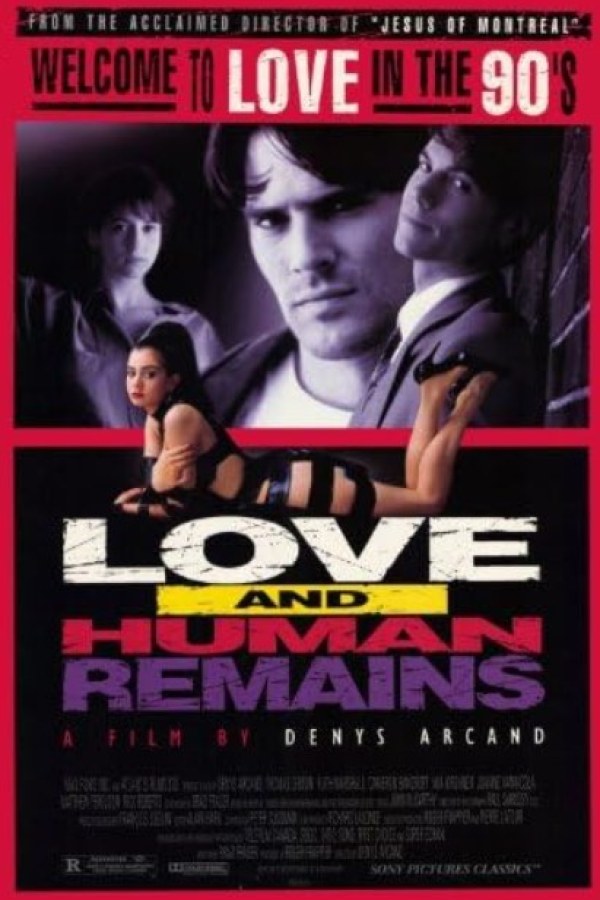
For a director so deeply rooted in French-Canadian culture, Arcand made a fascinating leap into English-language cinema in 1993 with Love and Human Remains, an adaptation of a highly controversial play by queer Canadian playwright Brad Fraser.
Set against the backdrop of a city terrorized by a serial killer, the film dives deep into the dark, cynical dating lives of a group of gen-X roommates, including a cynical, openly gay former actor and a fluid book reviewer. It remains one of the rawest, most explicitly queer-centric films in Arcand’s filmography, proving that his understanding of human desire, loneliness, and urban alienation effortlessly transcends language barriers.
The Verdict
Denys Arcand is a true titan of world cinema who treats his audience with absolute intellectual respect. He reminds us that the most cinematic thing in the world can simply be brilliant, honest people sitting around a table, stripping away their societal masks, and talking about what truly matters: love, mortality, and pleasure. For the QueerFilmHub community, Arcand’s filmography is a glorious masterclass in sexual liberation, dark wit, and the courage to question every empire before it falls. 🚀🌈