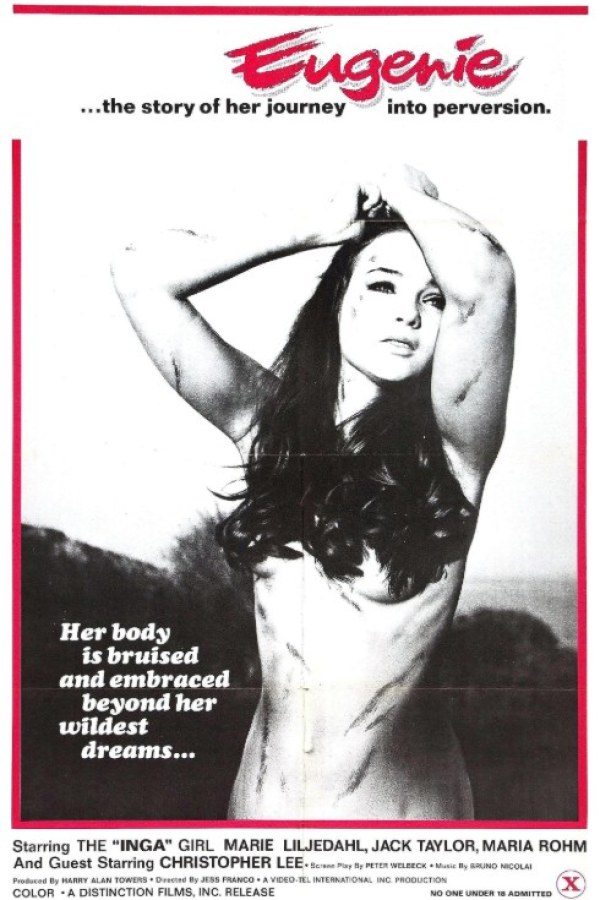
Jesús "Jess" Franco was a prolific Spanish filmmaker, composer, and pioneer of European exploitation, cult cinema, and erotic horror. With a career spanning over five decades and more than 180 films, Franco became a titan of underground cinema, celebrated for his hypnotic visual style, jazz-infused scores, and surreal explorations of taboo, desire, and gothic horror.
🎨 Visual Style & Core Themes
Dreamlike, Surreal Aesthetic: Franco was renowned for his fluid, improvisational camera work—frequently utilizing rapid zooms, handheld framing, and disorienting compositions to build a hallucinatory atmosphere.
Gothic Eroticism & Taboo: His work consistently merged gothic horror motifs (vampirism, castles, mad scientists) with explicit eroticism, challenging conservative censorship norms throughout Europe during the 1960s and 70s.
Queer Subtext & Female Vampirism: Long before mainstream cinema embraced fluid sexuality, Franco centered many of his narratives on sapphic desire, female agency, and subversively queer dynamics through the lens of horror.
Jazz & Avant-Garde Soundscapes: Often composing under pseudonyms (such as Clifford Brown), Franco relied on avant-garde jazz, psychedelic organ melodies, and atmospheric ambient cues to drive the rhythm of his films.
🌟 Key Works in Franco’s Filmography
The Awful Dr. Orloff (Gritos en la noche, 1962) – A foundational landmark of European gothic horror that catapulted Franco to international attention and established his obsession with mad doctors and surreal atmospheres.
Vampyros Lesbos (1971) – A psych-rock cult masterpiece starring Soledad Miranda that redefined the sapphic vampire subgenre with striking psychedelic visuals and an iconic soundtrack.
Venus in Furs (Paroxismus, 1969) – A visually hypnotic erotic thriller blending surrealism, jazz, and revenge, showcasing his signature dream-logic approach to narrative.
💬 QueerFilmHub Perspective
“Jesús Franco was a fearless visionary of euro-cult cinema—an uninhibited auteur whose hypnotic, jazz-fueled visual style and subversive explorations of desire paved the way for queer subversion within genre filmmaking.”