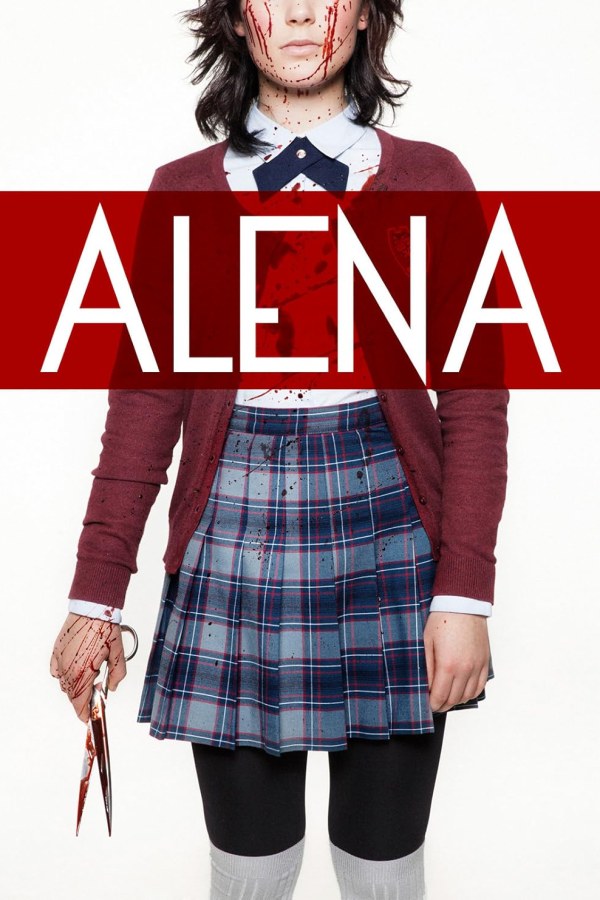
How the Swedish psychological horror laid the foundation for an acting method rooted in vulnerability, trauma, and magnetic darkness.
When analyzing the contemporary roles of Amalia Holm, it is impossible to escape the feeling that beneath her screen confidence and sharp charm always lies a profound, dangerous secret. To truly understand where this magnetic, onscreen unrest originates, one must look back to 2015. It was then, as a twenty-year-old debutante, that Holm took on the titular role in the Swedish psychological horror Alena, directed by Daniel di Grado. This role was not just a conventional career kickoff—it was the artistic cornerstone upon which Amalia founded her entire acting universe.
🎭 The Body as a Cage: The Physicality of Isolation
In Alena, Amalia Holm is faced with one of the most demanding tasks for a young actress: she must portray a character entirely defined by trauma, alienation, and deep class shame. Entering an elite boarding school, her character tries to become completely invisible to survive.
Holm builds this performance almost entirely without words. Her method in the first half of the film relies on an intense physical minimalism and withdrawal:
A hunched posture, a persistent avoidance of eye contact, and the nervous clenching of her hands—Holm brilliantly rejects any superficial overacting in favor of raw, authentic Scandinavian realism.
She presents the protagonist's body as a psychological prison, a site where two opposing forces violently collide: the paralyzing fear of the school’s oppressive social structure (represented by her bully, Filippa) and a simmering, deeply buried desire for intimacy (directed toward Fabienne).
👁️ A Gaze That Spawns Monsters
The defining element of Amalia Holm’s acting profile—a signature trait that would later guarantee her global success—is her gaze. In Alena, the actress's eyes become the primary narrative instrument.
As the possessive, aggressive, and dark Josefin enters Alena's life, Holm is forced to portray a severe psychological fracture. The audience slowly begins to realize that Josefin is not merely an external threat, but a direct projection of Alena's own suppressed rage, guilt, and hidden desires. Holm masterfully navigates this internal decomposition of identity. Within her gaze, the helplessness of a victim begins to blend with a cold, predatory madness. This is no cheap horror grimace; it is a terrifyingly authentic record of the exact moment a broken psyche chooses bloody retribution over submission.
🔗 From "Alena" to Mature Magnetism: The Heritage of a Debut
The emotional landscape Amalia Holm mapped out on the set of this 2015 indie gem became her permanent artistic signature. The role of Alena taught her how to inhabit morally grey, complex, and unyielding characters.
Years later, when millions of viewers worldwide fell in love with her portrayal of Scylla Ramshorn in Motherland: Fort Salem, they fell in love with the exact same acting matrix that was born in Alena. Scylla—much like Alena—is a young woman trapped within an oppressive, militaristic system, concealing destructive secrets and balancing precariously on the razor's edge between light and total darkness. In both performances, Holm bypasses Hollywood clichés: she refuses to play the "sweet, innocent victim" or the "one-dimensional villain." Instead, she portrays a human being in a state of permanent, high-stakes psychological crisis.
💬 The QueerFilmHub Takeaway
Amalia Holm’s portrait through the lens of Alena is a story of an actress who, from her very first step in front of the camera, possessed the courage to touch queer identity in its most raw, uncompromised, and gothic state. Alena remains the essential textbook of her talent—an unrelenting study of how suppressed desires and unhealed trauma can hijack a human soul. For QueerFilmHub, this profile serves as definitive proof that true cinematic magnetism is born only when an actor has the profound courage to step directly into the dark.